
I am not following the custom of open letters with “honorable” or “respected”, because I do not know if there is anyone on the recipient’s side. There is no communication code between us, between me as an external collaborator and the management of Albanian Radio Television. Since 2019, when I started the “Artes” program on the state screen, six general directors have been changed with all the relevant staff at a close level. Every season, a new superior, a repeated headache, a deaf wall, which is more humiliating than the economic threat.
I don’t know what fate has in store, nor do I seek predictions, but I have the right to know what the RTSH bureaucrat has in store for me. My case cannot be isolated from a media system where arbitrary decision-making, like Mercury in retrograde, breaks even the last pieces of a configuration built over years.
Debt and silence
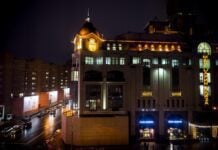
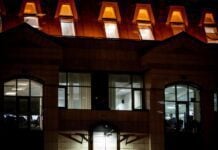
“The money has turned to ashes, so the royalties have not been paid,” they told me in the early days of June. “We ask for your understanding.” Right there, I felt sorry for the past of this country, the theater on the screen that I followed as a child, the sound and visual archive that no prince can awaken, the use by political squadrons of the left and right; I felt sorry for the windows full of light that do not close, with wooden blinds, as old as the Radio Television building itself, which is one of the last traces of a human architecture in Tirana; I felt sorry for those who have dipped their bread in sweat and left a good name, for others who leave a good name in this stolen, mocked factory, and I also felt sorry for the lazy and deceitful RTSH. Pity makes no difference, when things are immersed in misery. I felt sorry for the sincerity, courtesy and delicacy that the new staff was showing me at the first meeting. And the extended neck is not expected. I understood them well about the unpaid royalties from April (my monthly salary) and I experienced a return to the scenarios of the media companies of Kokëdhima, Frangaj and, most recently, Hysenbelliu. This has always happened with us: the past becomes the future in regression. Therefore, in conditions when your hands are tied, at least have a free tongue.
At the end of June, Albanian Radio Television opened the call for projects. I submitted my letters, like every year, my CV and project idea, adapting the requirements for the new season. The application closed on July 5. I was supposed to be on the air today, and, as far as I know, it is not one of the programs that are produced by external collaborators. I asked for a meeting with the general director twice, even though they had told me that she “doesn’t wait”. Her staff has not responded either.
What to do now? Invent an employment plan at the end of September, when people return refreshed to pick up where they left off in their professional routine and private media have closed the programming of the 2025-’26 season? In the coming months, what to do? That neck of the new directors, which had seemed touching and delicate to me, now appears to me in the form of a creeping reptile. I know that at this point the abuse has begun and I can forgive RTSH for its empty coffers, but not the lack of information, the arrogance of silence and the threat of financial consequences that comes from this, to take away, even for a few months, the right to practice your profession and to sever your ties of communication with the public.
contracts

Even in a legally regulated relationship, as long as they sign an agreement, the external collaborator as an employee is in a fragile position. He is part of the non-salaried space, subject to temporary contracting, 8-9 months. The contract is renewed at the beginning of the new financial year, but right then, in the middle of the journey, it can also be terminated. This is an illogical relationship for a journalistic program that, in order to function, needs continuity, stability and independence. This has worried me from the beginning, because I had just come from a bitter experience at a private television station, where the decision to fire me, as if they wanted to remove a leper, was implemented within two days.
The contract of the external collaborator with the state television is of a type that feeds the parazitism. The journalist is not recognized as a professional of a certain category, the presenter is recognized, who is usually called “moderator”. During these years I have signed a contract as a moderator and scriptwriter, when essentially my work is journalistic: it starts in the field and ends on the screen. With former managers who have had journalistic experience, I raised the concern, in the presence of the RTSH lawyer, about the lack of recognition of the notion of “journalist”. To the superiors, this fact, besides reminding them of something from their professional past, left them indifferent.
The external collaborator is not protected or compensated for the consequences of force majeure, although the 15% income tax is withheld, without calculating and withholding social and health insurance contributions. During the Covid-19 pandemic, with the suspension of the program, payments were of course suspended, while the management drove the final nail in the coffin: in the middle of the season, without informing me, they cut the fee.
Even the use of copyright is limited. I have had difficulty withdrawing copies of my shows from the Archive, when I needed or requested them for documentation, reference or audience performance purposes. I am talking about the shows from 2019-2021, which were removed from publication on the YouTube platform, after the channel was blocked due to the conflict between RTSH and the Agency for the Collective Administration of the Rights of Performing Artists. In the continuous letters and reports to the management staff, a path that I have always followed, I have expressed the request for the return to circulation of this two-year work. For them, it was like asking for a tip in the snow.
With the end of the television season every June, comes the waiting phase until September or October, to find out whether the contract with the institution will be signed or not. Usually, the season starts when the directorate deems it reasonable, which can move your program to another channel, on another day and time, breaking the half-established connection with the audience. I remember the director commanding in the corridor, with the appearance of a black market currency exchange dealer who challenged the Bank of Albania from the sidewalk in front of it, in the mid-90s. Wiggling a chain in his hand, he would tell me that I was in vain opposing the switch to channel 2, “because on the first, I like more spectacle.”
Every beginning of the season, along with the chaos and unequal treatment, the program is dictated by video walls, outdated technology – if on the day of filming, the microphones were silent, you had a lucky day at work – robotic cameras are imposed with the visual formula “two chairs, one screen for the background, plan-counterplan, double plan”, without elaborating any aesthetic requirements for each program. Even if you have worked on some concepts for the graphic design of the background with very good artists of contemporary Albanian art who are part of RTSH, the management destroys them and inserts in the middle of the season the stripped screens of Agon Channel from ten years ago, which there is no Grabockë to camouflage. Two very talented artists worked in the graphic studio, one was forced to leave, the other is on the run. It is said that the new director plans to contract an external graphic studio to create the new image of the television, while the internal graphics department has been left in limbo due to the freezing of programs. This is the type of management that does not recognize the capacities of its employees, that dismisses them by violating the rules and employs individuals who, elsewhere, are paid with a salary, that is, who do not live on journalism, but use this opportunity as a snack or for some credit for a higher social status, and why do they take on a show with a three hundred and sixty-degree table and a podcast on top of it, that is, two salaries, what the hell. If this were not the case, why exactly did the new directorate block external collaborators?
Someone will say after this, even the best houses have their toilets. They do. The claim to keep toilets as good as houses must also take into account the ghosts in locked rooms, the ghosts of freedom, the last issue I want to touch on.
Freedom
Working during the summer with the collections of daily and periodical press at the National Library, for the first and second period of the Albanian transition, I noticed the poisonous addiction to politics and pornography. The addiction to politics remains, while pornography lives in the exhibition of intimacy in public, welcomed as a liberal code of expression of the way of life. And yet, in the newspapers “Koha Jonë” and “Shekulli” the topics of the press and television, of the laws and regulations for the profession of journalist, have received attention. Albanian Television, due to the still not pluralistic conditions of the media market, has been in the center of attention.
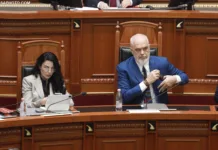
Today, a journalist becomes news when the prime minister ignores the question or responds with a dry throat, mentioning to the journalist the owner, with whom the prime minister has shared more than just bread. Scenes like these are being certified as a criterion of dissidence in journalism. The simple, spectacular fable that quickly goes viral is a subject for a cause that gains attention for journalist and civil society organizations. Petitions have even made a comeback, as in the mid-90s, when this fashion came with a hunger strike. But the rights of journalists are not discussed in terms of the daily practice of the profession, what effects the air currents and storms provoked in the newsrooms have, by the flapping of the wings of a butterfly in the government courtyard.
The next question is: to what extent does journalism in state-owned media exercise the right to freedom of speech and criticism? Embedded in people’s consciousness as the megaphone of the ruling party, Albanian Radio Television has had a short but good period of professionalism and impartiality in recent years, when Gëllçi led the institution and the political program in the evening prime time was hosted by Lutfi Dervishi (whom I miss).
The exercise of freedom is not a formula that is applied without feeling and recognizing its value. Here, the story of Thespis from the ancient Greek theater comes to my mind as an argument, as Augusto Boal tells in “The Theater of the Oppressed”. One day, Solon went to the theater where Thespis, a poet and drunkard, was also playing. He began his performance modestly, but as he left the chorus, he could not contain himself and began to talk about the city, politics and laws. Until that moment, no one from the chorus had understood that the freedom to say what he thinks was possible. Thus, the protagonist entered the history of theater. After the performance, Solon congratulated the chorus and turned to Thespis: “People can be influenced by this play of yours and this can pollute our culture. It doesn’t matter what you said or what words you used. What matters is that today you showed that things can be said. You showed people that it is possible to speak, that everyone can think for themselves, to choose their own words. This sets a bad example. I know they can, but this should not be understood… Don’t do it again!”
According to this fable, the individual does not only have professional freedom, he has an inner freedom, he also has a civic freedom, which he can express through his profession. The question is “how” and in this “how” the identity of the journalist is concluded.
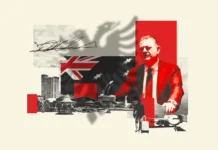
Over the years, several directors have directly told me “if you are dissatisfied with the government, go out with the DP, not on the Albanian Television screen”; “you cannot criticize the urban renaissance”, or through other subordinate directors “tell her to be careful”. The final gesture of the departing director was to remove the photo of Edi Rama in front of the bowl of spaghetti, part of the logo of the “Artes” program, because it had been the subject of discussion in one of the shows. Whatever the reason, it was removed without asking me. And yet, the Albanian Radio Television screen is an incomparable space for me. Citizens pay for it, of course, not of their own free will, and the challenge that the directors do not take on, which is the essence of the problem, is how to make the state screen public.
For me, there is a reason why someone chooses to remain loyal to a person, an idea, a taste, a screen, an audience, just as there is a reason for someone who jumps from branch to branch, for a much better salary, for a silkier screen. Thanks to the profession, someone manages to distance themselves from reality and to nourish demands that are not simply natural needs for sleep, sex, food, reproduction, to understand that life expands into mystery and freedom is one of the mysteries. And mysteries are not in the ether, disconnected from what a person does, defends and fights for every day.
Contrary to what most people think about that screen and the labels they put on it, I am for the protection and restoration of this public institution that is a history of our national culture, no matter how entangled with the ideology of the past regime, no matter how corrupt and unfree in democracy. It can change itself and the perception of others about it, thanks to the awareness of the professional freedom of the leading individuals and those who work within the system. Everyone can contribute to change, not by seeing the profession in relation to dependence on the institution, but in relation to the quality of the work they do as a professional. In this process, the journalist has a harder time administering not so much political control, but an entire social and cultural mentality structured according to the spiral of fear and silence, which of course is also linked to political control. This is the main difficulty I have in my daily life for the realization of the program, it is the mentality of yesterday and today that hinders people’s courage to publicly express what they think.
One of the first times I failed at a show about unionism in the arts. I had initially had a long conversation with the Secretary General of the Artists’ Unions, and the day before the shoot he didn’t respond.
He is a civil servant, he is subordinate to the Ministry of Culture and the Municipality. I can imagine his predicament. There are countless people with whom I work throughout the year, in institutions, events, groups, streets, and who want to be invisible, anonymous, far from anything that puts them in front of public responsibility, because they see even public responsibility as something that incriminates you politically. On the other hand, the Public Relations rooms have been significantly strengthened, both in state institutions and on the private front of the “cultural industry”, offering only one kind of view, what the scene wants to see and hear. This too is a limitation of the collective freedom of society, as much as of the individual freedom of the journalist. These are the professional predicaments that I grapple with every day because I am never given the opportunity to share them with the public, because my job is the public.
The stances of journalists’ associations that only react to fines and payment issues are disappointing, such as the recent two-finger letter to clear their mouths about the “foreign collaborators” of Albanian Radio Television. And it was unclear who they were talking about, journalists or firefighters.
A journalist with the income they receive today has to work hard without breaking the bank to keep their family and health normal, to travel and rest. Like every citizen. Like most citizens. With the difference that, a journalist is a prerequisite for society to maintain a free conscience. If a people does not stand up for the atrocities committed against them, it is the journalist who does it in the name of the people, and for this they are public property.
So, what practice should you follow to create a source of freedom in this place where even the deepest pool dries up/ even the hardest rock cracks?
My practice is this:
- Avoids propaganda, advertising, conflict of interest and the type of information produced virtually, without contact with reality;
- Attention to topics such as art and politics, the role of the intellectual, establishment politics versus the perspective of creators working on the margins of the system;
- publication of cases when culture is trampled on, violated, compromised;
- not a restorative attitude towards spiritual, filmic or literary heritage, because it is important to review and compare eras and not to consolidate stereotypes and clichés. In these cases, provocation is a healthy attitude for society, which, in order to preserve the enduring value of the cultural product of the past, must continue to test and question it;
- to worry about what needs to be improved, but also not to give in, for the sake of numbers, to the public’s fleeting tastes;
- The studio is the place where reality finds a stage, not the stage where reality is produced.
- Studio conversation is not built on pleasing the guest. Before people agree, they have to exhaust their arguments;
On the other hand, “Artes” tries to identify individuals or small groups in the field, who have found forms not only to survive, but are using the new conditions of communication with the public in favor of the language of the arts. These spontaneous sources usually do not attract media attention, do not have the allure and commercial aggressiveness, and will probably never become “official culture” and affirmed. Even better if they are outlined as anti-culture. And precisely for this reason, I believe that it is the journalist’s duty to find culture and art where it happens sincerely and according to the strengths of each person, not only where it appears ready to be exposed with great financial and media support. Ultimately, in the space of a culture without a market, these two worlds, inside and outside the state institution, interact without knowing it, informally and constitute the face of contemporary Albanian culture and art.
At this point, we part ways with leaders who seek populism, approval at all costs, and numbers.
I wouldn’t tell the director all this if I met her. Part of it is written in the project I submitted. The legal and technical concerns, yes, I want to believe that her management model will not fall into the matrix of the boss who runs the institution from the saddle. If I had time, I would tell her something else. In early August, when I was insisting on an answer for the new season, I saw an interview of the prime minister’s wife advertised on Albanian Television’s social networks, accompanied by a photo that retouched her age without shaking her hand. I would encounter the same advertisement at the ticket sales points. It seemed to me inconsiderate and servile that in the spaces for public products of RTSH, an interview that the lady did not give for RTSH media is advertised, and moreover where she, for her part, advertises in the title the most expensive commodity she has: Freedom is my power, she said. This work of freedom of the Prime Minister’s wife, the only person he knows of as an opposition in this country, is like mentioning the rope in the house of a hanged man.
Finally, in writing these lines, I am aware of what Orhan Pamuk says: “To write is to make someone angry.” In the Albanian context, it means to incite enemies and revenge.

Elsa Demo është e angazhuar prej vitit 2000 me raporte, analiza dhe ese mbi artet dhe kulturën në shtyp dhe televizion. Në bashkëpunim me Ardian Klosin ka hartuar antologjitë “Shqipëria kujton. 1944-1991” dhe “Shqipëria tregon 1991-2010”. Është doktoruar për Studime Letrare (2020). Është e autore e “Te Teatri” (Berk, 2023) dhe “E gjelbër hiri në të zezë” (Logbook, 2024). Jeton në Tiranë.