


On October 5, 2023, when the Special Prosecution Office decided to separate criminal proceedings no. 49 of 2019, no one expected that one of the names that would appear on the horizon would be that of a police officer.
The new proceeding, no. 49/3 of 2023, was opened for a long list of charges ranging from the production and trafficking of narcotics, money laundering, structured criminal group, abuse of office to the disclosure of secret acts and passive corruption of justice officials.
It all started with suspicions that an Albanian citizen, Dario Myftiu, based in Durrës, was organizing the trafficking of large shipments of cocaine and heroin to Italy. The capillaries of his network extended to the province of Bergamo, where his main associate, Saimir Baroti, was involved not only in the distribution of drugs, but also in the transfer of significant amounts of dirty money to Switzerland.
The money was secretly moved to Albania through the informal “Hawala” system, which was suspected to be managed by Ervis Ferizaj in Tirana. The latter not only controlled the transfers, but also directed the drug trade through his associates.
At the height of this investigation, on May 27, 2021, three prosecutors – SPAK, Brescia Antimafia and the Lucerne Cantonal Prosecutor’s Office – set up the Joint Investigation Team, a structure that worked in parallel in three countries, exchanging evidence, messages, interceptions, movements and debunking. None of them had imagined that one of the “traitors” would be from within the system itself.
The officer who lived between two worlds

Igli Haxhiaj was part of the Special Operations Force, a structure that operates in the field where criminal investigations require precision, discretion and absolute trust. In official documents, he appears present at every step of one of the most delicate operations of 2019, the surveillance and interception of a suspected international drug trafficking network between Albania, Italy and Switzerland.
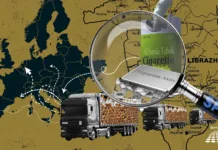
It was about the group led by Elvis Doci, known as “Visi i Pojës”, together with Denis Muftiu and Erion Kapidani. The organization had six logistical bases in Italy, three of them in the province of Brescia and others in Lecce and Brindisi. The bases served for the storage and distribution of drugs, including managing the transport of hidden cargo in heavy trucks.
Over the past 5 years, the group trafficked at least 1.3 tons of cocaine to Italy. The Brescia court issued 24 arrest warrants for Elvis Doçi’s group, including for him as the group’s leader.
The drugs, imported from South America, were transported to Europe through northern ports and then to Italy, using trade routes and legal cover.
In the SPAK investigations, Igli Haxhiaj’s name is found alongside colleagues who installed wiretapping devices in vehicles and premises, who kept individuals under surveillance, who accompanied prosecutors in every technical detail of the operation. One of the people he was supposed to follow was Denis Myftiu, who remains wanted, but subsequent investigations showed that the officer began offering information in exchange for money.
In the communications of the encrypted SkyECC platform, SPAK identified Igli Haxhiaj as the user with the code HY67U7.
Investigations show that he acted with careful tact, using secure channels and trusted persons to avoid leaving electronic traces that could link his activities to the drug trafficking and financial transfer network.
Under the identity HY67U7, he spoke not as a law enforcement officer, but as someone moving within the network he was supposed to dismantle.
His encrypted conversations began to match data that only a person with official access could know: the names placed under wiretapping, the vehicles followed, the phone numbers of the suspects’ families, and even the stages of the operation against Braniol Liço.
In a series of messages with the contact 8AIVIH, he talks about “info that sells,” about “cost,” about ways of communicating that should leave no trace.
In the communication, Igli mentions which people were under surveillance, gives details about field observations, and offers “camouflaged assistance,” on the condition that it be understood as “coincidence.”
He mentioned payments and spoke with a confidence that indicated this was not the first time he had negotiated behind the scenes.
In another conversation between the same codes, on 05.12.2020, HY67U7, who according to the investigation was an officer, directly addresses the main suspect in the investigation with the words:
“You, the bride, your mother-in-law, Asti, have your phones tapped and be careful when you talk. If you want more info, they’ll give you money.”
In the intercepted conversations, Haxhiaj appeared clear and direct in his demands for personal benefits.
He provided information that could help Dario (Denis) Muftiu’s associates evade police control or more easily manage drug shipments and financial transactions.
In addition to electronic messages, some conversations also took place in person, indicating his effort to minimize any risk of discovery and to create a reliable network of clients interested in inside information.
Further, investigations show that Haxhiaj did not provide information without receiving guaranteed compensation.
He directly negotiated the amount of the benefit, using various tactics to ensure that each transaction was clear and irreversible for the other party.
Continuing the conversation, he explains the terms of the agreement in coded jargon:
“We are 3 out of 5 thousand brothers.” – the file states.
According to the investigation, this phrase is interpreted as an offer for three people to share the payment of 5,000 euros, which would mean a total of 15,000 euros for the complete information.
The Special Prosecution’s investigations show that Haxhiaj was not simply a middleman.
He coordinated, tested, and negotiated drug supplies, ensuring that each “shipment” went smoothly.
One of the conversations discovered on February 10, 2021, between Haxhiaj and an associate with the pin code SEJRCV, clearly shows his role.
“Brother, show me a picture of that job and basically how it works… Do any of your other friends take you to work or what?” – writes SEJRCV.
“Yes, no one is thinking about robbery, brother… Because the gun goes off, they become m… Because I want to know so I know what to say to the guys who are going to go…” – writes Haxhiaj.
Haxhiaj used his network of friends to deliver drugs without directly exposing himself, maintaining contact and control over every detail of the activity.
On March 8, 2021, his communication with the same associate indicated negotiations over drug prices and quality:
“Brother, how is your work there… Do you have any good merchandise at a good price?” Haxhiaj writes to the unidentified person, who uses the code SEJRCV.
“How come I don’t move to make money like always. Where? I have a Holland with 29 I think… They offered me a few days ago, original… I’m going to have a full 25 if I go to work with scales all the way.” – answers SEJRCV.
The messages shed light on how Haxhiaj ensured that every shipment was tested, prices were stable, and customer supplies were not interrupted.
In conversations with the pin code FM369H, Haxhiaj discussed transportation logistics and cargo testing:
“I have a piece in Athens, do you want it? What do you have to bring it with? 29k to buy these, 2k shipping, 31k… we’ll take 30k.” – writes the user with the code FM369H.
The prices and terms (“PML”, “boddy”, “rolex”), according to the prosecution, are codes for different types of substances or qualities.
Haxhiaj does not refuse and responds to the interlocutor.
“I understand, file… Is it good?… With money in hand, I don’t want it without money…”
FM369H instructs him to take “a piece for testing”:
“Take one for a test and decide… I’ll have to ask them if they have any left and how much,” writes the user with the code FM369H.
“In the communications carried out by citizen Igli Haxhiaj via the SkyECC application with the pin code HY67U7, there are also other conversations with other users of the SkyECC application in which they communicate about the purchase, sale and transportation of narcotics,” the prosecution documents state.
However, from the investigative actions so far, no evidence has been found that any quantity of narcotics has been seized in any case and as a result, no expertise has been conducted as to whether or not the substance is a narcotic or what its quality is.
But the conversations and communications conducted prove beyond any doubt that citizen Igli Haxhiaj and other individuals communicate precisely about the sale, purchase or transportation of narcotics, regardless of whether these episodes were carried out or not.
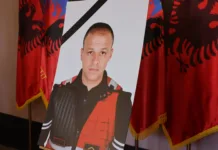
Igli Haxhiaj was arrested on November 27, 2025 by the Police Supervision Agency, following the execution of the “prison arrest” security measure imposed by the Special Court.
Haxhiaj is accused of the criminal offenses of “Abuse of office” and “Disclosure of secret acts or data”.
The Anti-Terrorist Officer has denied in court any involvement in the network of Elvis Doçi, known as “Visi i Pojës”, which is suspected of trafficking 1.3 tons of cocaine to Italy over the last five years.
Haxhiaj stated that he did not communicate with the group members and that his name was used without his knowledge, also denying that he had any account on the encrypted SkyECC application.
However, the Court has decided to keep Haxhiaj in prison due to the danger and importance of the charges.
Meanwhile, three other members of the group, Asti Llupi, Altin Shehaj and Erald Salla, will appear before district courts, after being arrested with the aim of extradition to Italy.
This is not the first case that SPAK has identified the involvement of police forces in criminal groups. Previous investigations have shown that State Police officials have used their public office to support international drug trafficking networks, providing classified information, helping wanted persons evade arrest and being involved in laundering money obtained from criminal activities. The most recent case involves former police chiefs Dedan Gjoni and Jonida Babameto, who are suspected of collaborating with a structured criminal group operating between Albania, Europe and Latin America.

Lindita Çela është një gazetare investigative e shquar, e njohur për raportimet e saj të përpikta dhe të guximshme mbi krimin e organizuar dhe korrupsionin në Shqipëri. Me një karrierë që shtrihet për mbi dy dekada, Çela është konsoliduar si një figurë e rëndësishme në fushën e gazetarisë investigative, duke fituar vlerësime si në nivel kombëtar ashtu edhe ndërkombëtar për punën e saj.