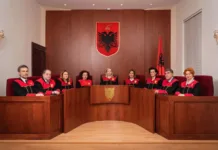



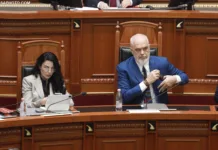


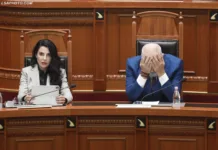

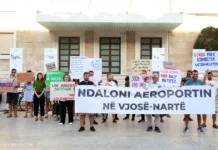




The recent Rama-Berisha pact produced an amendment to the electoral code that deserves to be explained in detail to clarify for those who have even the slightest interest in how things might go in the upcoming elections.
The essence of the changes to the code were two aspects, changing the formula for open and closed lists and the diaspora vote.
Let’s take a look at the lists of deputies to see who won and who lost. The parties agreed and voted that the lists be closed for 1/3 of them and open for the rest based on the recommendations of the Constitutional Court. This means that in the voting list 1/3 of the list will be unvotable by citizens, so they will be able to cast their preferential vote only for 2/3 which will be lower in the ranking. If we take as an example the Tirana District which produces 36 deputies, in the list of political parties the first 12 names, i.e. from 1 to 12, will be unvotable by citizens. Voters will be able to select as their deputy
preferred only to the other 24 names that rank below No. 12.
Here we have a big problem with democracy, because if with the previous system voters had the opportunity to vote for the entire list, and thus the deputies (even though they went to parliament with a closed list as the speaker’s preference) were known for their direct electoral weight, in the next elections we will not know what the electoral weight of the first 12 on the Tirana list is because they are unvotable by the electorate.
But beyond the problems with democracy that the whole agreement has, let’s explain who won and who lost and why this agreement came about in this form.
In my opinion, the Socialist Party is undoubtedly the big winner from this code. Edi Rama has managed not only to weld his favorite people into the Assembly, guaranteeing control over the parliament and the parliamentary group, but he has also created a perfect mechanism for maximizing the vote.
Practically, even though 1/3 of the list is closed, all the rest of the Socialist Party candidates in all districts feel in the race. They will fight for every personal vote, will engage their entire social and family circle and will manage to raise financial resources and use them with the belief that they will be more efficient than the other competitors. The Socialist Party will maximize its vote throughout the territory of Albania, while also having the guarantee that Edi Rama will have absolute control of the Parliament. I would not be surprised if Edi Rama filled the first 1/3 of the list with anonymous but loyal characters and threw into the race the entire elite of the Socialist Party, which after 12 years in power has accumulated enough resources to conduct a spectacular campaign.
to guarantee political continuity.
The opposite is true for the Democratic Party. Referring to the polls and the situation on the ground, the Democratic Party appears unmotivated and without the necessary resources. There is mainly no renewal of structures and leadership and the offer is the same. Consequently, the competition within the DP will remain under Berisha’s balcony, as to who will create the most conviction for him for loyalty and unconditional service to secure a place in the first 1/3 of the list. Consequently, the rest of the list, given that it has almost 0 chances of entering parliament, is unlikely to be effective in mobilizing measures and financial resources.
Many may ask, “Why did Berisha make a deal that is not in his interest?”
This question would be valid if you start from the premise that Berisha is seeking to come to power, but I believe that Berisha’s goal is to maintain the opposition monopoly for at least the next 4 years. Given that, his concern is not Rama’s benefit, but whether other opposition forces will succeed in becoming competitive in the opposition field and take away his monopoly and all the benefits it brings (practically his negotiating power for the situation he is in).
And here we come to the main victims of this reform, which are the new parties. As the founder of a new political force (Nisma Thurje) I know very well that it is almost impossible for a new force to emerge on the Albanian terrain if it does not manage to motivate a large number of people to engage in the campaign and mobilize their entire social and financial arsenal. Albanian society remains tribal in composition, especially beyond the Tirana ring road and closely tied to the interests of power, therefore a change in the vote can only come if a significant mass of charismatic actors come together under a single banner and appeal forcefully and project
power.
The current code completely removes this possibility, because by closing the first part of the list, new parties are doomed to become a “one man show” giving hope only to the leader of the Tirana list. As a result, it will be almost impossible for the candidate list to be filled with people with social influence because no one will see a real chance of winning the race.
The second problem that new parties have with this code is that by making 1/3 of the list unvotable, they cannot even learn what each party’s electoral power is, a lesson that would be very valuable in the next elections and a fact that will become a bone of contention after losing the elections.
So in conclusion, the electoral code has been carefully tailored to Rama’s interests to guarantee another mandate by maintaining absolute control over the parliament and the party, and Berisha’s concern to maintain the opposition’s monopoly for another 4 years by annihilating the parties.
the new one.

Besjan Pesha është një studiues i shkencave politike dhe njohës i mirë i politikës në rajonin e Ballkanit. Ai ka mbaruar Masterin për Shkenca Politike pranë Universitetit të Tiranës dhe ka një eksperiencë të gjatë si aktivist i shoqërisë civile, duke filluar me themelimin e Lëvizjes Mjaft e më pas me themelimin e Nismës Thurje.
Besjani gjithashtu ka një eksperiencë në politikën aktive si edhe në qeverisje ku ka shërbyer në disa pozicione të rëndësishme përgjatë viteve 2007-2013.
Së fundmi ai punon si konsulent politik në rajon dhe gjatë kohës së lirë kontribuon për shteg.org.