


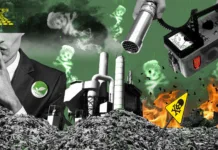
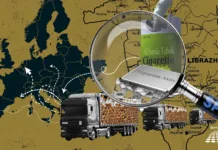
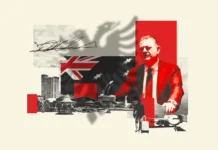


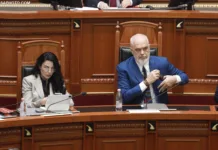


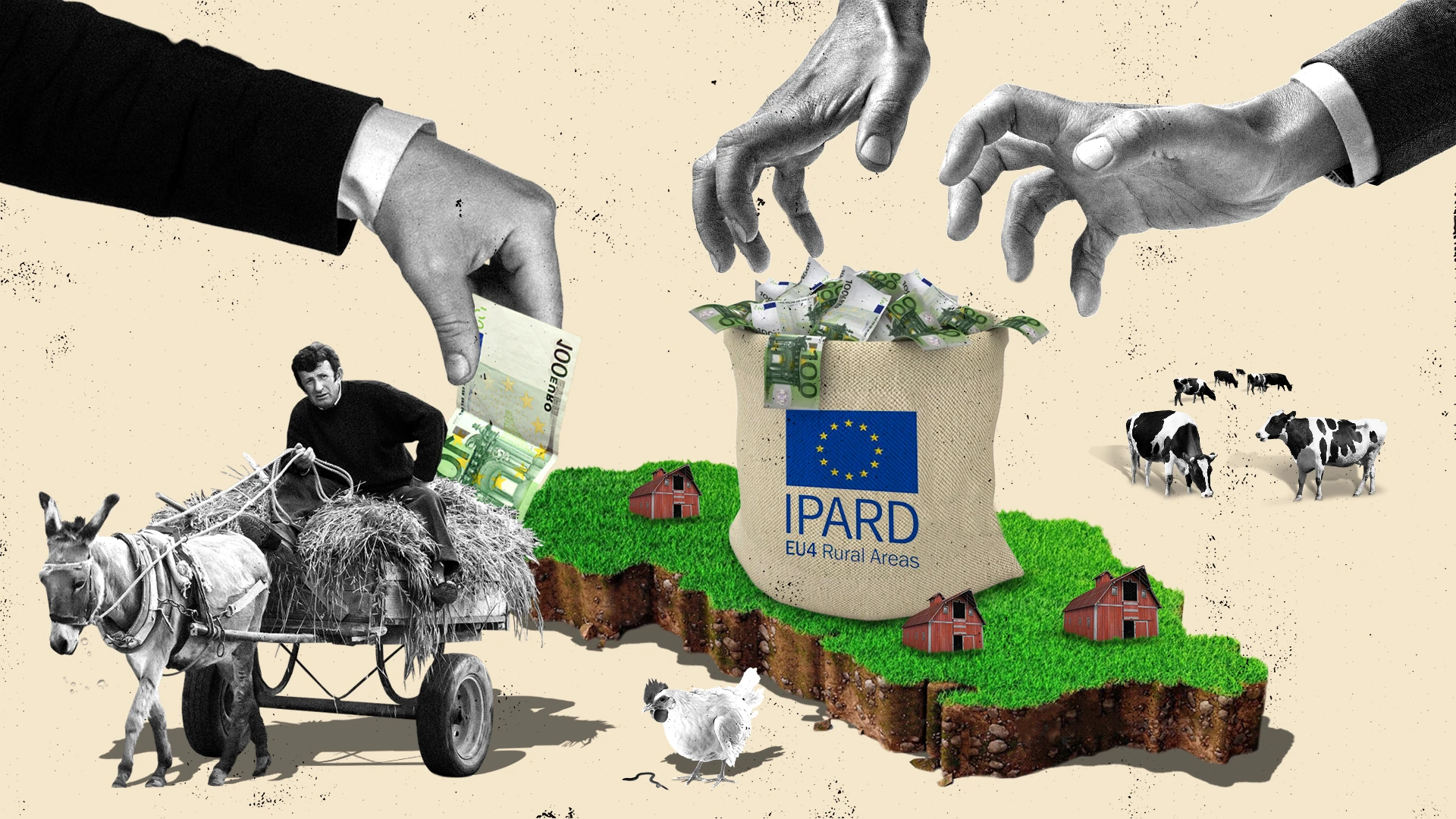
William Easterly, an American economist and professor at New York University, wrote an essay on foreign aid in 2006. His central thesis highlights the contrast between the idealism of promises and the reality of poor implementation. In his astute observations, Easterly points out that foreign aid institutions measure success by the staggering amounts of money distributed and the grandeur of promises. Amidst this money and promises, substance is often missing. “The lack of market responsiveness,” as Easterly put it, means that institutions have little pressure to correct mistakes or reward what works.
The failed ones can continue unchallenged, often devolving into political games rather than real development. One place where this facade is suddenly crumbling is Albania.
At the heart of the discussion about foreign aid in Albania are, unsurprisingly, aspirations for membership in the European Union (EU). The Albanian leadership often mentions the grand promise of “Membership by 2027” foreseen in the national plan. Even EU representatives have called the conclusion of negotiations by 2027 an “ambitious but achievable” objective – (Cichocki, 2024). As of today, June 2025, this means just over two years. To anyone familiar with Albanian realities, these promises sound emptier than the rural villages themselves that are being emptied.
It is difficult to find a fundamental sector of Albanian society that is ready for membership today: rule of law, free media, fair elections, separation of powers, transparency, education, health, infrastructure, economy, agriculture, etc. Within this picture, Easterly’s thesis of superficial promises and increasing funding, which brings more harm than good, becomes even more convincing.
However, while misdirected aid has its pitfalls, European assistance has also proven to be of extraordinary value: over the past two decades, EU grants and loans, often through the European Bank for Reconstruction and Development (EBRD) and the Western Balkans Investment Framework, have reconstructed over 100 km of regional roads, including the Fier and Vlora bypasses that facilitate trade and movement within the country – (B. Vlajcic, 2023).
The justice infrastructure has been enhanced by the Court of Appeal building in Vlora, completed in 2006, and the Serious Crimes Court complex in Tirana -(Tirana Times, 2006). The EU4Schools programme, after the earthquake, is rebuilding or modernising 58 schools in 11 municipalities with a grant of €75 million, creating modern classrooms for around 20,000 students -(EEAS, 2020). Even the penitentiary system was pushed forward with PHARE funds that completed the 750-bed Lezha prison in 1999, the first such facility since the 1997 crisis -(European Commission, 2025). These projects show that when European funds are protected from capture, they do not just write reports, but lay foundations, pave asphalt and keep classrooms open.
Despite these success stories, two real problems emerge in other major projects:
• Foreign aid can replace domestic initiatives and institutions, creating dependency.
• The inflated cost and questionable quality of some projects leave much to be desired.
Addiction is the cost of help.
The argument for this first point is that too much foreign aid makes a country dependent on it, preventing it from gaining the ability to solve its own problems. This is exemplified by the efforts of Alexander Hamilton, the first Secretary of the Treasury of the United States of America (US), who in his 1791 Report on Manufactures famously advocated protectionist policies. Hamilton aimed to protect America’s fledgling industries from foreign influences, arguing that American industry would never develop if the country depended on foreign competitors and imports. Easterly believes that this idea also applies in the context of foreign aid.
Protectionist policies would have been useful, for example, in the Albanian oil industry. A brief example is that of the Canadian company Bankers Petroleum, which has held the Patos-Marinza oil field concession since 2004, paying royalties widely criticized as far below regional norms.
Monitoring by civil society has linked their drilling to soil contamination, well blowouts, and even seismic tremors that damaged surrounding homes, leading to temporary production suspensions in 2015 and a compliance review by the International Finance Corporation’s Office of Compliance and Ombudsman (CAO, 2013).
Local residents and officials have repeatedly protested, arguing that the mandatory 25 percent of royalties earmarked for host communities rarely arrive (Tirana Times, 2015). The case highlights how weak oversight allows strategic assets to generate both private revenue and public liabilities. This is an extremely disadvantageous partnership for most in Albania. These community damages and development setbacks could have been avoided if, say, there had been a technology transfer between Bankers Petroleum of Canada and Albania. An agreement where the foreign company would receive significant economic value for a limited period and, in return, would help Albania build and maintain its own refineries. This would be a form of foreign aid that is truly valuable to have.
As for imports and the dependency they create, it is enough to see the devastating effect that the distorted import-export ratio has had on Albanian agriculture. This extremely fragile sector is being suffocated by the large quantity and highly competitive prices of foreign imports. Often, local farmers have seen international products replace their own production.
This is precisely the outcome that protectionist policies similar to those advocated by Hamilton could prevent. Despite protectionism, it would be more accurate to say that Albanian agricultural policies in recent years have tended more towards market concern. The fiasco of the “Open Balkans” and its effects on the Albanian dairy sector attest to this (Monitor, 2022). However, this overdependence on external markets and external influences has made agriculture and other sectors of Albania unproductive and, for some, has left them frozen in a state of infantilism.
It turns out, then, that foreign aid intended to help developing countries reach the standards of industrialized democracies is in fact allowing them to survive in an almost parasitic cycle. It is allowing Albania to erode its great economic potential in exchange for the short-term monetary gain that external dependence offers.
Amidst all this, however, lies an even greater challenge, the cost of implementing projects and their dubious quality. Albania appears to have developed sophisticated mechanisms to ensure that foreign aid is captured in favor of the financial gain of a few. As expected, this comes at the expense of some truly vulnerable groups. The next section of this article will unpack these mechanisms by examining a particularly striking case study, the infamous IPARD II scandal, and how one of the most underdeveloped sectors of the Albanian economy was once again deprived of its extraordinary promise.
The mechanism of IPARD misuse

IPARD was a major European Union investment to align the standards of the Western Balkan countries in agriculture and rural development with those of the EU, always with the aim of membership; however, the IPARD saga entered a new phase in July 2023, when the European Commission, based on the findings of the European Anti-Fraud Office, OLAF, suspended reimbursements and new disbursements under IPARD II, after auditors documented €33 million in misused agricultural grants and a large number of systemic irregularities reported – (Ebrea, G. 2023).
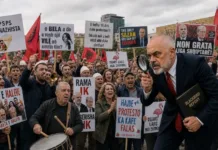
OLAF went further in the 2024 annual report, recommending that the EU keep the entire €112 million foreseen for IPARD III in suspense until Albania demonstrates credible guarantees – (Ebrea, G. 2023); to this point, there has been no domestic indictment, which feeds public skepticism that perpetrators closer to the government are more equal than others before the law, to borrow Orwell; the IPARD episode provides a clear and evidence-based picture of corruption that country-level perception indices often overlook.
At the heart of the multi-year IPARD funds embezzlement scheme were government-approved “consultancy” firms that pressured vulnerable beneficiaries to pay for services that should have been free in the first place, including fake offers and rigged tenders, inflated project costs, shell companies and fictitious enterprises, fabricated invoices, and more.
At the center of this scandal was the Agency for Agricultural and Rural Development, AZHBR, a state institution created after the first round of IPARD funding and tasked with distributing all IPARD funds; ultimately, it was the lack of oversight of this agency, the lack of voice and access of rural communities and farmers, and the unconditional trust that the EU placed in the Albanian government, that led to this scandal.
The EU made an assumption that Albania would be sufficiently responsible to use these funds for the intended purposes of IPARD, namely rural development, better market access, increased competitiveness, greater security and increased agricultural productivity, but this assumption that countries facing widespread corruption and democratic challenges would make responsible financial decisions after a substantial injection of debt-free capital is, for lack of a better word, unfounded.
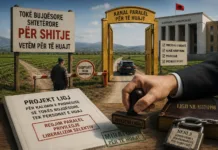
In practical terms, the main failures of IPARD II in Albania occurred because there were intermediaries, including the government itself, between foreign aid institutions and the intended beneficiaries; one “remarkable” way in which this occurred was through a legal technicality in the way the AZHBR structured the application processes, meaning that individual farmers could not apply for funds unless they had a commercial tax identification number, a requirement appropriate for large-scale producers.
The idea sounds reasonable from a Western perspective, because it incentivizes a larger producer who can employ more people from rural communities and increase productivity on a larger scale, but the problem was that the vast majority of farmers in Albania, almost 90%, are small-scale producers with less than 2 hectares – (Imami et al., 2020), therefore the typical Albanian producer does not qualify for such a commercial tax number and, in effect, this technicality excluded precisely the intended beneficiary who needed the IPARD program the most.
In addition to this major bottleneck, the complexity of the application procedures ensured that most of these small-scale farmers found it very difficult to apply. This difficulty was compounded by administrative hurdles and time-consuming bureaucratic steps that farmers had to fit into their busy schedules. As is well known, time is of the essence in small-scale farming, and most Albanian farmers could not afford to be away from their land for days on end. AZHBR’s solution was to approve private consultancy firms, linked to senior officials, that would ‘help’ farmers manage these difficulties. As expected, these government-approved firms charged farmers an upfront fee for their services, services that were supposed to be provided free of charge. In a media report, one local producer said that he had to take out bank loans, which are unfavourable in Albania, to pay for these consultancy fees. He added that the firm required up to 30 percent of the grant amount in advance.
In practice, farmers in Albania, the target group of this foreign financial assistance, had to go into debt just for the opportunity to apply for funds. Equally surprising is that those farmers who took out loans to pay this absurd price for advice on grants originally intended for them did not necessarily win those grants.
This was one of the state-managed mechanisms through which a state agency empowered well-connected members of the political elite to create consulting firms that siphoned funds from one of the most disadvantaged groups in Albania, while simultaneously excluding the very farmers who would benefit most from those funds. It was organized collaboration in its purest form.
Official announcements followed from the European anti-corruption office, OLAF, that Albania would be excluded from the IPARD III program, limiting its access to €112 million in follow-on funds.
The IPARD episode may have brought Albanian mechanisms for seizing funds to international attention, but in reality the tool of corruption is much more deeply rooted in Albania. Another scandal now infamous in domestic circles is that of the ‘incinerators’.
In short, the incinerator scandal involves three waste-burning projects in Elbasan, Fier and Tirana, where prosecutors allege that unsolicited contracts and falsified invoices siphoned off hundreds of millions of euros to officials and their associates, leaving the plants half-built and causing a short-lived public outcry. In the case of Tirana, the plant never even existed.
Leaders of a political party launched an investigation into the matter in 2022, which highlighted that the largest winners of IPARD II grants consisted of 24 shell companies. Their mission was to draw up fictitious invoices and vouchers to justify the allocation of funds. Many of these mechanisms also existed during the IPARD II episode, but this case had a peculiarity, the cost of labor. These shell companies had to justify the significant costs of human resources for which they received funding.
Their ‘smart’ solution was to employ retired senior citizens from rural areas. This was particularly predatory, because disadvantaged seniors in rural communities did not need much pressure to sign employment documents. In some cases, their workforce included people who had long since passed away before the contract was signed.
These were just some of the ways in which the misuse of foreign and national aid fueled the corruption machinery developed by a country that depends on well-intentioned but poorly implemented funding programs.
Oversight and institutional failure

The European Anti-Fraud Office (OLAF) was mentioned a few paragraphs above. This is the highest institution for combating fraud and mismanagement. Despite its importance, all the files forwarded by OLAF to Albanian prosecutors ended with zero convictions. The fact that inspection agencies and laboratories were filled with clientelistic appointments and that this led to a multi-year fiasco rich in embezzlement had no consequences. Even the director general who headed AZHBR at the time of IPARD II sat in the chair of the Minister of Agriculture in Albania during 2021-2023.
It would be inaccurate to say that Albania has weak institutions or a lack of rule enforcement, as the reality is that state institutions are extremely powerful and act in a coordinated manner towards the same goal: to benefit from this seemingly benevolent, but very naive, foreign aid policy of the international community.
At this point, something needs to be said about the role of the European Union in this incident. It is clear that allocating large financial sums is not enough to lead a country towards membership. The EU cannot work towards membership without acknowledging and confronting the limitations of Western Balkan countries like Albania.
If one were to single out the most important thing for which aid institutions, such as the EU, should take responsibility, it is the evaluation of projects during and after funding. Post-grant checks rely only on formal self-declarations, not on real-time monitoring of EU values, financial integrity or the success rate of projects. Finally, there is no proactive verification of whether grant recipients respect EU values or standards, or whether they have implemented a project well enough to qualify for further funding.
In addition, it is important to monitor and evaluate the NGOs receiving grants themselves. Post-project studies by independent third parties in Europe should become standard in all funding programs. The longevity of an organization, the necessary experience, staff, reputation in cross-border partnerships, fiscal responsibility – all of these should be examined much more closely. Perhaps everything should be done through a centralized platform, instead of very distributed ones.
Perhaps there should be some independent, accredited and much more active auditors on the same platform. Another example from the IPARD episode deserves mention here. In the same investigation uncovered by local actors in Albania it was found that more than half of the NGOs that applied for funding were created right when the IPARD program was launched. Many of them, around 50%, had created a CV in construction as a result of foreign aid initiatives after the 2019 earthquake and had little connection to agriculture (Korrieri, 2023). All these clear ethical violations easily passed through the gaps in the EU’s supervisory capacities. Neither the EU nor Albania can allow this situation to last much longer.
Failure from within, the case of Italy
So far we have seen the mechanisms by which Albania embezzled funds directed to agriculture from the IPARD program, but this episode is far from unique in the Western Balkans region. Italy is proof of how European money for agriculture can revive rural economies and, at the same time, enrich criminal networks. The Nebrodi pastures scandal shows the scale: for fifteen years, mafia clans rented everything from NATO radar stations to airport runways to embezzle around €1.5 billion in pasture subsidies from the Common Agricultural Policy, CAP; in October 2022 the Patti court sentenced 91 defendants to around 600 years in prison – (Repubblica, 2022).
Further north, 165 Lombard municipalities already exceeding nitrate limits continued to receive €113 million in “green” payments from the CAP in 2023, a model that Greenpeace calls “public funds thrown at pigs” (Greenpeace Italy, 2024).
The fraud has also spread to new funding envelopes. Operation “The Big Cart”, dismantled by the European Public Prosecutor’s Office, OPPE, in April 2024, uncovered a network of fifty shell companies in Puglia that laundered counterfeit invoices through the Italian 110 percent “super bonus” tax credit scheme, inflating equipment prices and shifting millions abroad – (Ministry of Agriculture, 2020).
Rome’s response shows what can be achieved with capacity: the Ministry of Agriculture has increased the agri-environmental corps of the Carabinieri from 145 to 5,000 officers and, together with the paying agency AGEA, now checks every CAP request against cadastral registers and criminal databases (MASAF, 2025). Italy and Albania share the same bottlenecks in complex rules and politically connected intermediaries, but Italy’s digital tools are increasingly closing the door before the money disappears.
North Macedonia’s challenges
EU funds have brought physical infrastructure to North Macedonia. For example, IPA grants repaired the Skopje-Štip highway, halving travel time. However, smaller but more creative scams continue to erode trust. The most symbolic case is that of the “Erasmus Barber Shop”: in 2020 a two-chair barbershop in Skopje earned €270,000 for a digital learning project and, according to the indictment, forced experts to return 60 percent of their salaries in cash; prosecutors have so far recovered only €80,000 – (Balkan Insight, 2020).
Gaps in oversight persist. The Anti-Fraud Coordination Service, AFKOS, established in 2019, has six employees, a budget of €120,000 and no investigative powers, so only one of the 37 irregularities reported in 2024 reached the prosecution – (Ministry of Finance PR, 2024). Meanwhile, the European Anti-Fraud Office, OLAF, has ordered Skopje to reimburse €2.2 million misused through Erasmus+ – (MIA, 2024).
Large envelopes of funds remain at risk. IPARD II (2014-2020) had allocated €80 million; by May 2023 only €49.2 million had actually been spent -(CrossBorderLocal, 2024).
IPARD III retains €97 million of EU money for the period 2021-2027, but disbursement still depends on national co-financing and reliable audits.
Like Albania, North Macedonia channels grants through understaffed agencies, creating gatekeepers who trade access for political loyalty. Until Brussels ties every rural euro to open data, random field checks and whistleblower protection, a barber’s mirror can drain EU coffers as efficiently as a Sicilian airfield runway.
Beyond Easterly
What is needed now is a reassessment of context, reality, and power. We need to examine the problems facing Albania, and other countries, not from a political perspective, but from a perspective rooted in reality. Power shapes narratives. What is told to others may not match what is happening on the ground, especially in places where corruption is deep. Foreign aid institutions cannot make assumptions based on their own experience. This change is not easy to achieve, but a tangible step is to start with what has really worked.
In Albanian agriculture, we have a moment where foreign aid focused on what works. This moment is related to the Myzeqe Collection Point, a project funded by Heifer International, which brought milk cooling and storage systems to farmers, heads of cows, and created an organizational structure that enabled collaboration.
Under the close supervision of the Heifer group with cameras and microphones, and with the guidance of Albanian academics from the Agricultural University, a small village went from poverty and lack of organization, to integration into the local economy and overcoming subsistence farming during a crisis in the dairy sector (you can find more details here).
Four elements made this project successful: (i) assets were provided directly to beneficiaries rather than through intermediaries, (ii) trusted local experts provided specific design insights, (iii) international oversight ensured implementation and problem-solving, and (iv) follow-up reports attested to the success years later. These elements should become a mandatory part of many other foreign aid initiatives.
Looking ahead, Brussels could condition the release of IPARD funds and other envelopes on several verifiable criteria:
i. Publication of all grant award data in open formats
ii. Grant management by EU institutions and not by state actors in Albania
iii. Independent EU monitoring teams with access to project sites carrying out quarterly checks
a. These teams can use an evaluation matrix that is taken into account in current and future awarding
iv. A formal EU requirement mandating verifiable involvement (e.g. by video) of the intended beneficiaries
v. Prohibition of paid consultancy services for projects
vi. Exclusion of all individuals involved in the IPARD II scandal
vii. A proven track record in the relevant sector
a. A multi-step interview process for newly established organizations
These are some ideas that could work in the Albanian context. Some may not work, many more may be needed. Above all, iteration and evaluation are key, consistently and consistently. Only transparent data, adaptive surveillance, and a willingness to correct course will turn the EU’s future euro from headline figures to real progress on the ground. If Brussels and Tirana embrace this discipline, the next round of aid could finally build trust rather than drain it.
Note: This article was produced within the framework of PULSE Thematic Networks, a European initiative that supports international collaborations in the field of journalism.
Special thanks to journalist collaborators: Marta Abbà & Aleksandar Samardjiev

Gjon Rakipi është gazetar investigativ pranë “Tirana Times”.
Ai mbulon tema mbi sipërmarrjen sociale, ekonominë, industrinë dhe mjedisin, duke përdorur kërkim cilësor e sasior për të rritur transparencën publike. Fusha të tjera interesi janë marrëdhëniet ndërkombëtare,(Dis)integrimi evropian dhe shoqëria e informacionit.
Rakipi ka përvojë në median online e multimediale.