
















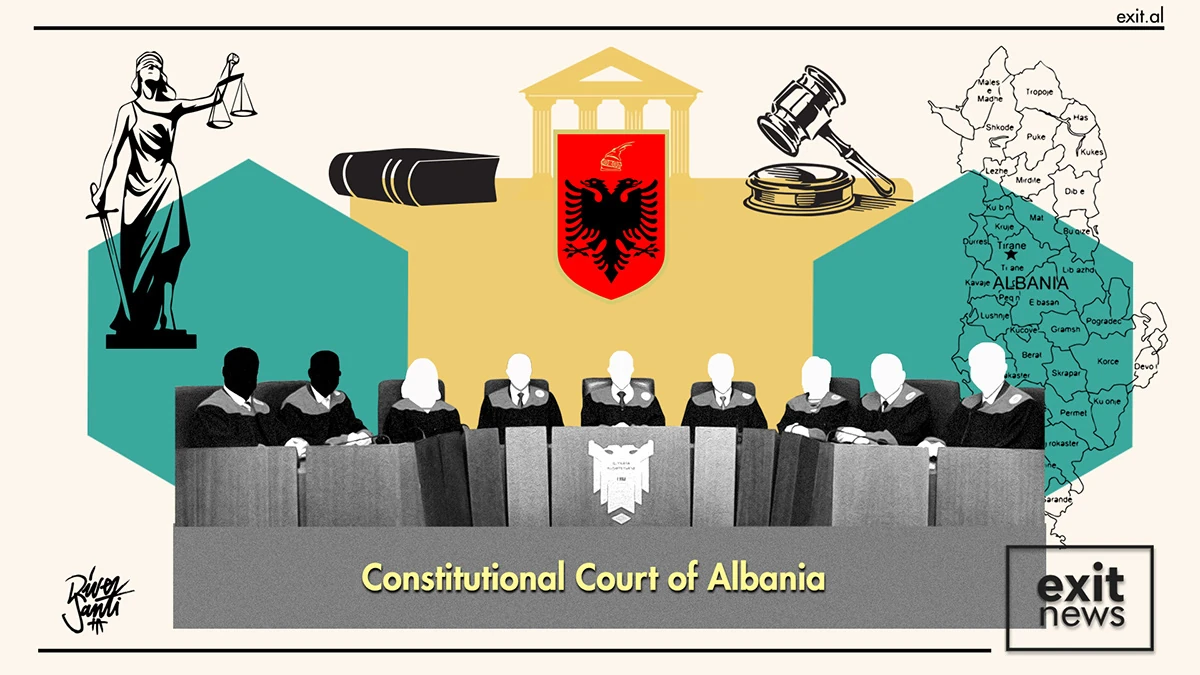
The Constitutional Court’s reaction? Instead of showing the weight of the institution, it sounded more like a cry of a mixture of fear and frustration, beautifully packaged as institutional concern. A kind of: “what can we say, you know your job”?! But since they were lied to and trampled on, there is nothing! But what’s wrong with a little wiretapping, a little investigation? Maybe the problem is not with the procedure, but with the content of what can be discovered?
Now let’s get back to SPAK and the way they use the right to wiretap judges. Of course they can, but why without a court decision? Why simply with a prosecutor’s authorization? The law allows this only in emergency cases, when there is no time to get approval from the court, because the situation is escalating rapidly and the criminal offense is in the process of being consummated. But in the case of the Constitutional Court, where the investigation began 35 days after the decision, where was the emergency? Was it that the building was burning and there was no time to knock on the court?
At the end of the day, we are not talking about specific names in the Constitutional Court, because some individuals really leave something to be desired, but about an institution. If the Constitutional Court is not respected, what can the lower courts expect? And if the standard of investigations and wiretapping is applied according to interest, then what kind of justice are we talking about? What reform!?
And, of course, after all these unanswered questions, comes the reaction of the Constitutional Court. A reaction that, unfortunately, does not sound like a dignified defense of the institution, but more like the panic of those who know that someone is entering their inviolable territory.
Okay, let’s talk about SPAK’s principles! Take the cases of the Special Appeals Commission (KPA), for example, it has not disclosed 27 decisions on the dismissals of prosecutors and judges! Since SPAK is using the “reasonable suspicion” standard to launch investigations, why doesn’t it extend this diligence to the KPA as well!? Because we are not talking about a 30-day delay, but 12 months! Or when “ours” delay, it is called a workload, while when others delay, it is called a violation of the law?
And if the KPA judges cannot change the decision during the clarification, then why all this waiting? Or maybe, according to this standard, we have room for “reasonable suspicions” of corruption? Why doesn’t SPAK get involved in this work? But the judges of the Special Court, who have turned the clarification of decisions into a marathon sport, why aren’t they investigated? Or in the ordinary jurisdiction and the Courts of Appeal, where decisions are forgotten in drawers for months and years?
And let’s go to the next level: the Supreme Court! There, the queue for decisions is longer than a visa for America. Decisions that await consideration or remain unsolved for years. A situation that, according to SPAK’s logic, should have translated into a wave of wiretapping and investigations. But surprisingly, it doesn’t happen!
But, as always, this story will pass with a collective “hanging”. The investigation? Closed, not closed… who knows! The 15-day wiretaps of Judge Gent Ibrahimi and others? Disappeared, archived or simply never heard?
We should have had such debates, but everything ends up in oblivion, until the next scandal comes along.

Flamur Vezaj është gazetar Freelance. Ai ka punuar prej vitesh në mediat kryesore në vend, ku ka mbuluar çështjet e krimit dhe të drejtësisë. Vezaj ka përfunduar studimet në Universitetin e Tiranës për Gazetari dhe Juridik.