














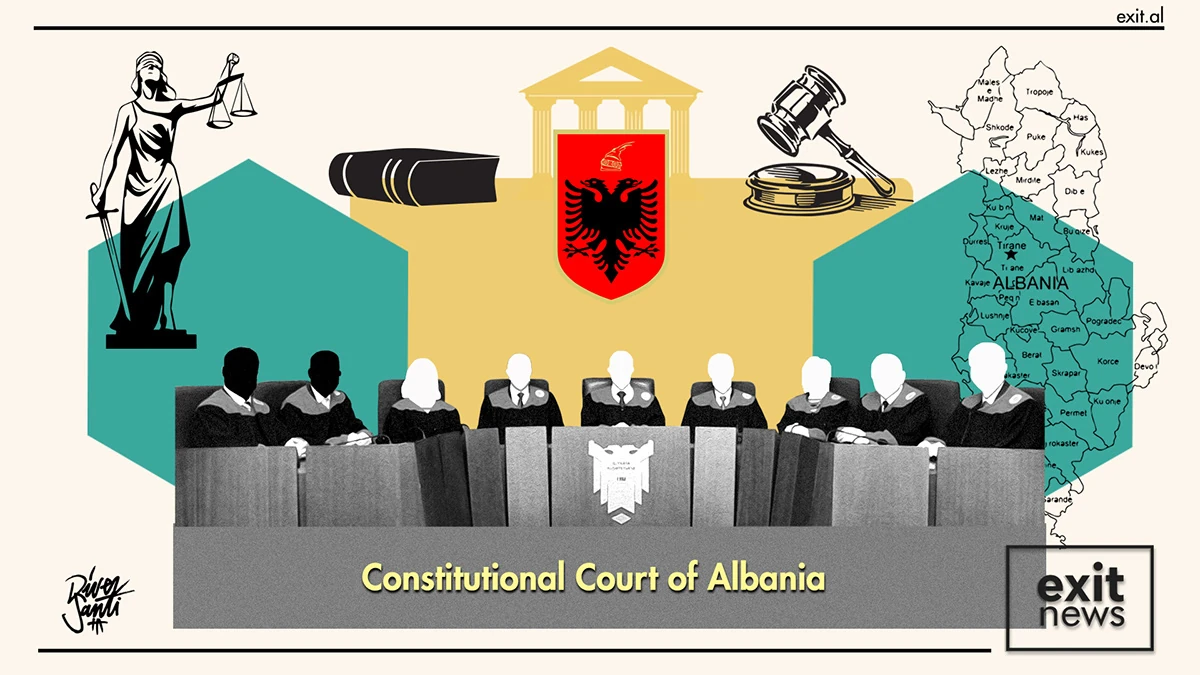
One of the most sensitive issues for the Albanian public, the environment and the future of sustainable development in the country, received its final decision in the Constitutional Court.
Amid strong claims from environmental experts, lawyers, and the opposition, who saw the law as a threat to natural heritage, and a majority that promoted it as a path towards the development of tourism and agrotourism, the Constitutional Court decided to pave the way for the construction of tourist structures in protected natural territories.
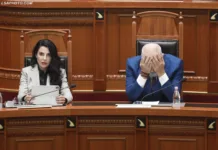
In the session of July 31, 2025, the Constitutional Court, divided in positions, rejected the request to repeal the law “On Protected Areas”.
Four judges saw a constitutional violation. Four others did not. But, without reaching the necessary majority of five votes, the request was deemed dismissed.
The President of the Court, Holta Zaçaj, explained that many of the claims were dismissed for lack of constitutional argumentation or because they were not submitted within the deadline.
The Constitutional Court’s decision immediately sparked a reaction from lawyers involved in the case as well as environmental experts who opposed the decision and statements of the President of the Constitutional Court.
According to them, the issue of protected areas had strong legal arguments and deserved the vote of the 9 members of the Constitutional Court to protect the future.

In a session that began from 10:00 am to 5:00 pm on July 31, 2025, the Constitutional Court rejected the request of 37 opposition deputies to repeal Law No. 21/2024 “On some additions and amendments to the Law on Protected Areas”, considering it in accordance with the Constitution.
The law, approved in February of this year with only a majority vote, provides for facilities for tourism and agro-tourism developments within several protected areas, paving the way for the construction of accommodation structures.
In November 2024, 37 opposition MPs filed a request with the Constitutional Court to repeal this law, considering it incompatible with the Constitution of Albania, international agreements, and European Union standards for environmental protection.
The opposition’s request was based on the main argument that the law violated several key points of the Constitution, especially Article 58, which guarantees the protection of nature and the environment.
“This law violates the principle of equality before the law, favoring certain business groups and violating Albania’s international obligations,” the experts argued before the Court.
In the decision announced after two public hearings, the Court emphasized that the claims of the lawyers and the opposition did not have sufficient constitutional support, while some of them were considered late or new, such as the one for violating scientific research or legal certainty.
The opposition denounced that the public consultation was conducted formally and without the real involvement of environmental organizations and local communities.
“The voices of citizens and experts in the field were not heard during the approval process,” said activist Nora Cani.
Documents and minutes from several parliamentary sessions showed that only two non-governmental organizations were invited to provide their opinions, while many others were ignored.
This fact seems to have forced judge Elsa Berisha, in one of the judicial investigation sessions, to raise concerns about whether “the opinions of citizens and environmental organizations were really taken into consideration before approval?”
In response, an Assembly official emphasized that consultation reports had been filed and were considered sufficient by parliamentary committees.
But some evidence obtained confidentially from sources close to environmental organizations shows great political and financial pressure not to publicly oppose the law.
According to Article 56 of the Constitution and the Aarhus Convention, citizens have the right to be informed about the state and protection of the environment. However, the Court assessed that in this case, the consultation carried out by the Assembly on the draft law, despite being an initiative of the deputies and not the government, fulfilled this constitutional obligation.
“For the compatibility of this law, international conventions have also been considered, such as the Rio, Bern, Ramsar and Paris Conventions. The conventions are mandatory, but they are broad,” said President Zaçaj. According to her, each protected area requires its own specific legal protection. But until the submission of specific DCMs for these areas, the approved law “On Protected Areas” remains in force.
Another controversial point was the financial report that had to accompany the draft law. Article 82 of the Constitution requires that any law that brings about expenditures or changes in revenues have such a report.
But even here the judges were not unanimous: some argued that the creation of National Park Administration Offices does not entail additional expenses, while others emphasized that these are new structures that create new financial obligations for the state budget.
The court also dismissed the claims of violation of equality before the law and violation of the hierarchy of normative acts, emphasizing that constitutional arguments were lacking.
As regards one of the key points of the opposition, the incompatibility with the Stabilisation and Association Agreement and the European law (acquis communautaire), the court did not reach the majority required for a final decision. The judges’ positions were divided, therefore, as long as the required number of 5 judges for decision-making was not reached, based on Article 73, point 4, of Law No. 8577/2000, this claim is considered dismissed.
Specifically, according to one position, the SAA is an international agreement that aims at a process to be undertaken by the Albanian state, which defines the directives as a basis and reference for the approximation of legislation, but without making them instruments with binding force and part of domestic law in the constitutional sense and for this reason, constitutional control, according to Article 122 of the Constitution, extends only to the compatibility of the law under review with Article 108 of the SAA.
According to another position, Article 108 of the SAA cannot be seen as detached from the acquis communautaire as otherwise it would be rendered without substance.
The Court notes that the SAA aims at cooperation in the fight against environmental degradation, by defining a process of legislative approximation without imposing concrete enforceable obligations. Although the contested law ostensibly liberalises state policies in the administration of protected areas, it essentially constitutes a framework law, which is not self-enforcing and does not in itself bring about consequences and, consequently, does not infringe international obligations for environmental protection under the SAA.
The Court examined on the merits the claims related to the parliamentary procedure (relating to the accompanying report of the draft law and the public consultation), under Articles 82 and 56 of the Constitution, and the claims related to the content of the law in terms of compliance with binding international agreements for implementation and respect for national identity and natural heritage, under Article 122 and the Preamble of the Constitution.
Regarding the claim of violation of Article 82 of the Constitution in relation to the accompanying report of the draft law justifying the financial expenses for its implementation, the judges’ positions were divided in two directions, consequently the required number of 5 judges for decision-making, based on Article 73, point 4, of Law No. 8577/2000, was not reached. Under these conditions, this claim was dismissed.
According to the Court, the adopted law is a framework law, which does not bring direct consequences, and therefore, cannot be considered in conflict with international obligations. The concrete effects will be assessed when the sub-legal acts (VKMs) are issued, which will determine the details of implementation in each area.
It was also argued that international conventions are broad and do not provide a concrete, applicable framework to overturn the law at this stage.
Although the court debate was divided four to four on some of the claims, the court dismissed most of them, for lack of argument based on a constitutional analysis or because the judges did not reach the necessary majority of five votes.
Thus, referring to the decision, the claims for freedom of scientific research and legal certainty regarding the community are new claims, presented after the opening of the judicial review. As such, they were not taken into account.
Regarding the principle of equality before the law, the principles of the rule of law and the hierarchy of normative acts, the court considered it insufficient as a criterion, due to the lack of constitutional arguments.
The court that ruins the future

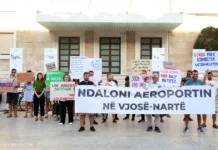
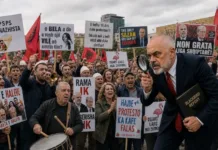
The Constitutional Court’s decision closed a legal chapter, but it did not end the political, moral and civic battle for protected areas in Albania. The issue is now destined to continue in European courts, in public opinion and in the conscience of today’s generation about what it will leave to the next generation. Tourism or concreting? Development or destruction?
The Constitutional Court, according to lawyer Irene Dule, chose not to protect Albania’s natural treasures.
“Today the Constitutional Court chose which side of history it will stand on, the majority decided not to protect Albania’s natural treasures. For me and my colleagues, representatives of the case, this is a disappointing decision, because the legal arguments were strong, the representation honest and dignified and that our environment deserves constitutional protection, but at least we remain calm in conscience because we did everything possible so that future generations inherit the Albanian land as beautiful as we found it,” Irene Dule told “shteg.org”.
The lawyer called the decision “disappointing” and warned that the battles to protect Albanian nature will not stop here.
On the other hand, MP Ina Zhupa accused the court of lacking courage and of using the 4-4 tie as a “trick to not decide.”
She warned that the case will go to the European Court of Human Rights in Strasbourg, recalling previous precedents such as the Marini v. Albania case, where it was considered that the equal division of votes violates the right to a clear and final decision.
“As of today, we no longer have protected areas,” Zhupa declared, thanking environmental organizations and lawyers for their dignified representation.
Environmental and public law experts have raised concerns that the law risks setting a negative precedent, as it allows construction within protected areas before an in-depth environmental analysis has been conducted.
The socialist majority approved the law that allows construction for economic and touristic reasons within Protected Areas, bypassing public consultation and ignoring the objections of civil society and the European Union.
Civil society argued that the lack of consultation and impact analysis of the law creates huge opportunities for corruption and “legitimizes the plunder of natural resources.”
The Law “On Protected Areas” was approved in February last year with 74 votes in favor of the majority.
The variant that was approved differs fundamentally from its initial version proposed by several MPs, for which public hearings were held, but in the final version coming from the government, and approved without consultation, the construction of large tourist structures within protected areas is permitted, as well as the transfer of decision-making to the National Territorial Council, a body that has no legal obligation to conduct public consultation.
While the government has considered the law a victory for economic development and the promotion of sustainable tourism, opponents of the law warn that the legal and civic battle to protect protected areas has just begun.
All eyes are now on the bylaws and the reaction of European institutions.

Gazetare me përvojë në raportimin e kronikës së zezë dhe çështjeve politike në Shqipëri.
Gjithashtu, ajo ka qenë pjesë e “Investigative Journalism Lab” pranë “Albanian Center for Quality Journalism” (ACQJ).
Në SHBA ka marrë leksione të gazetarisë investigative në Kolegjin e Bostonit.
Desada ka përfunduar studimet në “Media Leadership and Management” dhe “Political Journalism” dhe ka qenë e angazhuar në projekte dhe internship-e që fokusohen në gazetarinë cilësore dhe hetimore.