




In February 2025, Australia’s Transport Minister, Jo Haylen , resigned after a media investigation revealed that she had used her ministerial car for personal matters. In addition, it was reported that she had hired a state-paid driver to transport herself and her children to sporting events on weekends.
“We all make mistakes; no one is perfect,” Haylen said humbly, as he publicly read his resignation statement. An act that, in functioning democracies, is seen as the minimum of institutional accountability to taxpayers.
In England, former Chief of Staff to Governor Ned Lamont was also revealed by the media to have used a state vehicle for personal, non-work-related travel. Jonathan Dach, who left his position as Chief of Staff last summer, while authorities there also launched investigations into the senior official.
A simple internet search is enough to realize that such cases are not uncommon: high-ranking officials in Western countries have been forced to resign for personal use of state resources. And the response is usually the same: public apologies and removal from office.
But not in Albania. When officials are caught “off guard” by the media, they don’t apologize. They don’t resign. They don’t even show remorse. Instead, they threaten journalists, label them “maniacs,” “sluts,” and “the disgrace of journalism,” trying to avoid transparency with institutional arrogance and personal victimization.
This is the latest case with the acting mayor of Tirana, Ms. Anuela Ristani, who, after the revelations of the investigative show “Piranja” about the private use of the municipality’s car and driver, did not provide any clarification on the essence of the accusations, but attacked the media and accused them of “blackmail” and “psychological terror”.
How public cars turned into family servants

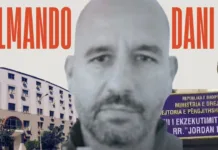
During a several-day observation of the show “Piranjat” , journalists documented the use of official vehicles of the Municipality of Tirana for the private needs of the family of Mayor Anuela Ristani.
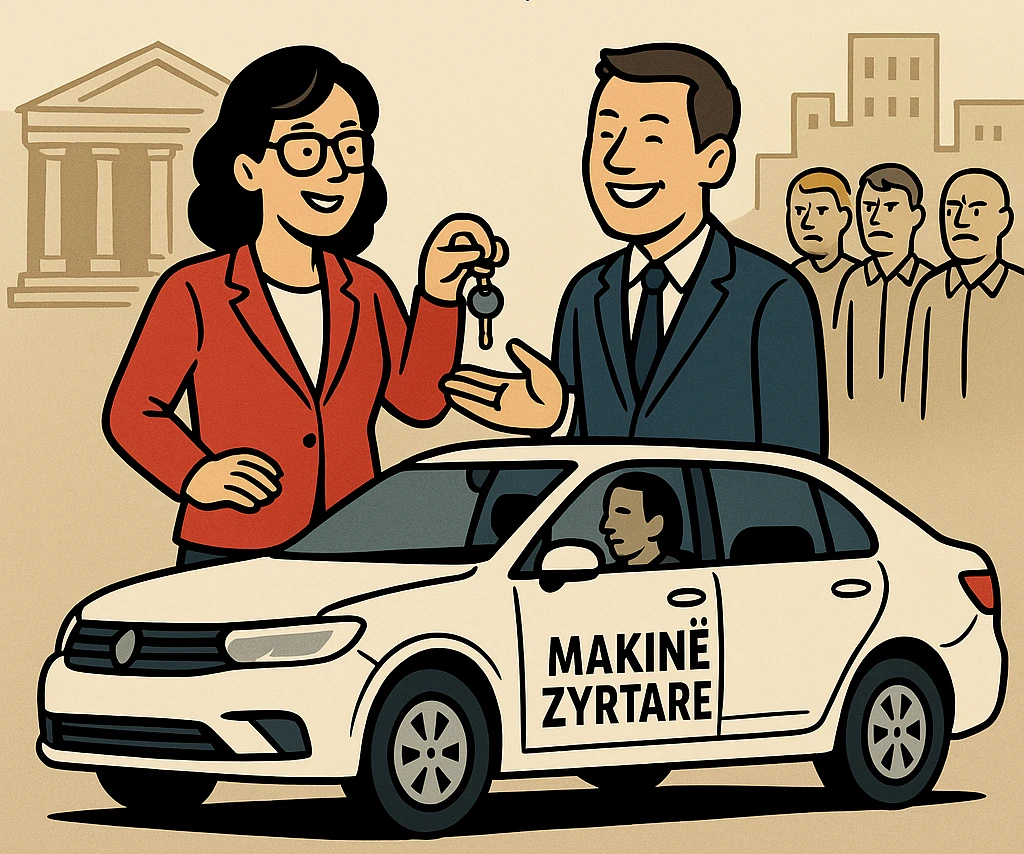
According to the report, “the white car with license plate AB649LD, property of the municipality, stops every morning to pick up Mr. Bledi Cikopana “, the mayor’s husband and an employee at the presidency. At the same time, another municipal vehicle is used to accompany her children to school.
Meanwhile, another municipal vehicle with the license plate AB338OA is used for other family needs, including taking the child to school. Mrs. Ristani herself, instead of heading to the office, starts the day with a session at the gym and appears at the office only after 9:00 in the morning.
Journalists raised questions about the legality and ethics of this use of public resources. Despite attempts to get a position from Ristani herself, she refused to clarify the use of public vehicles by her family members.
Instead of an explanation, the footage shows that Ms. Ristani also engaged in direct attacks on journalist Edon Kuqi and the “Piranha” team, using terms such as “basins”, “maniacs”, and “a disgrace to journalism”.
Meanwhile, on her Facebook page, she made a lengthy statement accusing the Piranja show of “blackmail”, “physical harassment” and “psychological terrorism”, while announcing that she has submitted all evidence and documents to the authorities and will pursue the matter legally.
It shifted the emphasis from an investigation into the use of public resources to an emotional reaction to the reporting.
“This is not a reaction for me as a public representative, but as a mother, wife and citizen. Because when media violence turns into physical persecution of minor children, then we are no longer dealing with journalism,” Ristani wrote.
She denied any attempt to stop the publication of the material and called the accusations of interference in the show’s social media pages slanderous: “I am not afraid of the truth … But stalking children is low even for the most brazen fines,” she emphasized.
However, there was no clear explanation regarding the reasons for the use of municipality funds by family members, or the fact that her private activities took place during official working hours.
Meanwhile, Ms. Ristani’s reaction also included direct attacks on journalist Edon Kuqi and the “Piranha” team, using terms such as “basins”, “maniacs”, and “the shame of journalism”.
The Albanian Journalists Association has reacted to Ms. Ristani’s statements, describing the language used as unacceptable and dangerous.
“Ms. Ristani, instead of transparently answering legitimate questions raised by a journalistic investigation into the use of public resources, chose to verbally blackmail the journalist and attempt to victimize herself,” the Association’s official statement states.
According to them, such attacks contradict institutional ethics and constitute a threat to press freedom in Albania.
“Any attempt to criminalize this mission through labels such as ‘persecution’, ‘blackmail’ or ‘psychological terrorism’ is a direct blow to press freedom,” it further emphasizes.
Journalism as protection of the public interest

“Safe Journalists Albania” emphasizes that reporting on the use of state assets for private purposes does not constitute a violation of privacy, if it serves the public interest. They recall that, according to international standards, “the private lives of officials can only be reported when directly related to public duties.”
The case of Ms. Ristani is not the first nor the only one where senior officials in Albania have been caught on the show “Piranhas” using public assets for personal purposes.
Former Foreign Minister Olta Xhaçka had made a ministry car available to her notary mother. A black Foreign Ministry SUV drove the elderly woman to a notary office next to the Edith Durham School every day, and the car remained there all day, at her disposal.
The former director of the “Illyrian Guard”, another public institution, was caught by journalists using the institution’s car to take children to school.
Former mayor Erion Veliaj was filmed using municipal vehicles to take his son to kindergarten every morning.
In all cases, the use of state administration cars and drivers to transport spouses and children, or other family members, to daily activities is clearly linked to the misuse of state resources and, as such, is absolutely reportable.
But as in all cases, instead of apologizing and clarifying public opinion, Ms. Ristani chose to victimize herself and attack the media, avoiding the core of the issue of abuse of public funds.
The difference between a country with functional institutions and a state with an arrogant culture of power becomes clear precisely in these moments: in Australia, a minister resigns for a car. In Albania, a mayor attacks the journalist who exposes her.

Lindita Çela është një gazetare investigative e shquar, e njohur për raportimet e saj të përpikta dhe të guximshme mbi krimin e organizuar dhe korrupsionin në Shqipëri. Me një karrierë që shtrihet për mbi dy dekada, Çela është konsoliduar si një figurë e rëndësishme në fushën e gazetarisë investigative, duke fituar vlerësime si në nivel kombëtar ashtu edhe ndërkombëtar për punën e saj.