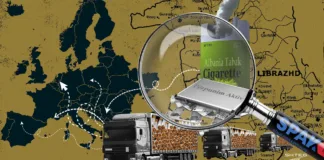














The Special Prosecution Office Against Corruption and Organized Crime has cracked down on one of the largest cigarette smuggling schemes in Albania, uncovering a criminal network that severely damaged the state budget and public finances of several European Union countries.
Investigations revealed that a cigarette factory in Albania, with a “fason” regime and “Inward Processing” authorization, was being used to evade customs duties. This factory produced cigarettes that were not registered as exports, but the shipments were unloaded within Albania to be smuggled into neighboring countries and the EU.
The value of the damage caused to the Albanian state budget by this scheme amounts to more than 3.6 billion lek (about 29 million euros). Meanwhile, the losses for European Union countries from the lack of taxes and excise duties reach 12.8 million euros.
According to the Prosecution, “the suspects acted within a structured criminal group with the aim of smuggling cigarettes produced within the territory of Albania to neighboring countries and then to those of the EU.”
“The “AT” cigarette factory was equipped with the “Active Processing Regime” (RPA) authorization, which exempts imported materials and exported products from taxes and customs duties. However, investigations have revealed that “the agreement between the investigated entity and the ordering company was made with the sole purpose of avoiding customs duties and that the Albanian entity itself determines the destination, which turns out to be non-existent,” the press release states.
In this scheme, customs officials also collaborated, who are suspected of “not having accompanied the loads with anti-smuggling structures until they left the territory of Albania and having carried out fictitious export clearances in the ‘Asycuda World’ system, as if this quantity of cigarettes had left our country.”
Also, “the production of cigarette packages without fiscal stamps did not enable the collection of customs duties in the country where they were destined for sale,” the prosecution explains.
In total, the investigations uncovered more than 30 cases of shipments destined for export that in reality did not leave Albania, using fictitious documentation and the collaboration of several customs officials, who allowed unloading and evasion of controls.
“It turned out that the agreement between the investigated entity and the ordering company was made with the sole purpose of avoiding customs duties and that the Albanian entity itself determines the destination, which turns out to be non-existent. The structured criminal group, in more than 30 (thirty) cases, has changed the destination and then unloaded the cargo destined for the ordering company on Albanian territory, with the aim of smuggling it to neighboring countries, without paying customs duties,” the announcement states.
After intensive investigations, the Special Court ordered the arrest of 6 people, including the owner of the IJ factory and several foreign nationals, while over 20 customs officers were ordered to report and banned from traveling abroad.
However, the cigarette trafficking scheme, the source of which was Albania, had previously been the subject of investigation by a group of investigative journalists.
In 2018 , an in-depth investigation by journalists revealed that the cigarette factory in Librazhd, licensed under the “Active Processing Regime” (RPA), was operating in a way that exploited legal and administrative loopholes to carry out smuggling.
According to the report, the factory imported raw materials and materials under a processing permit exempt from taxes and customs duties, with the aim of producing cigarettes for export. But in practice, most of the products did not leave Albania, instead, they were unloaded at internal warehouses without being registered as exported goods.
Export shipments were registered in customs documentation with fictitious destinations, while in reality the cigarettes were illegally distributed on the Albanian domestic market and in neighboring countries. This was made possible due to close cooperation with customs officials who allowed the uncontrolled passage of the shipments and the falsified registration of the export in the “Asycuda World” system.
Also, the factory produced cigarette packs without fiscal stamps valid for the countries where they would be sold, thus avoiding the payment of excise duties at the actual destinations.
The journalists’ investigation revealed that this scheme had a well-organized structure and support within several state institutions, which enabled the continuity of activity for a long period of time.
“Made in Librazhd”

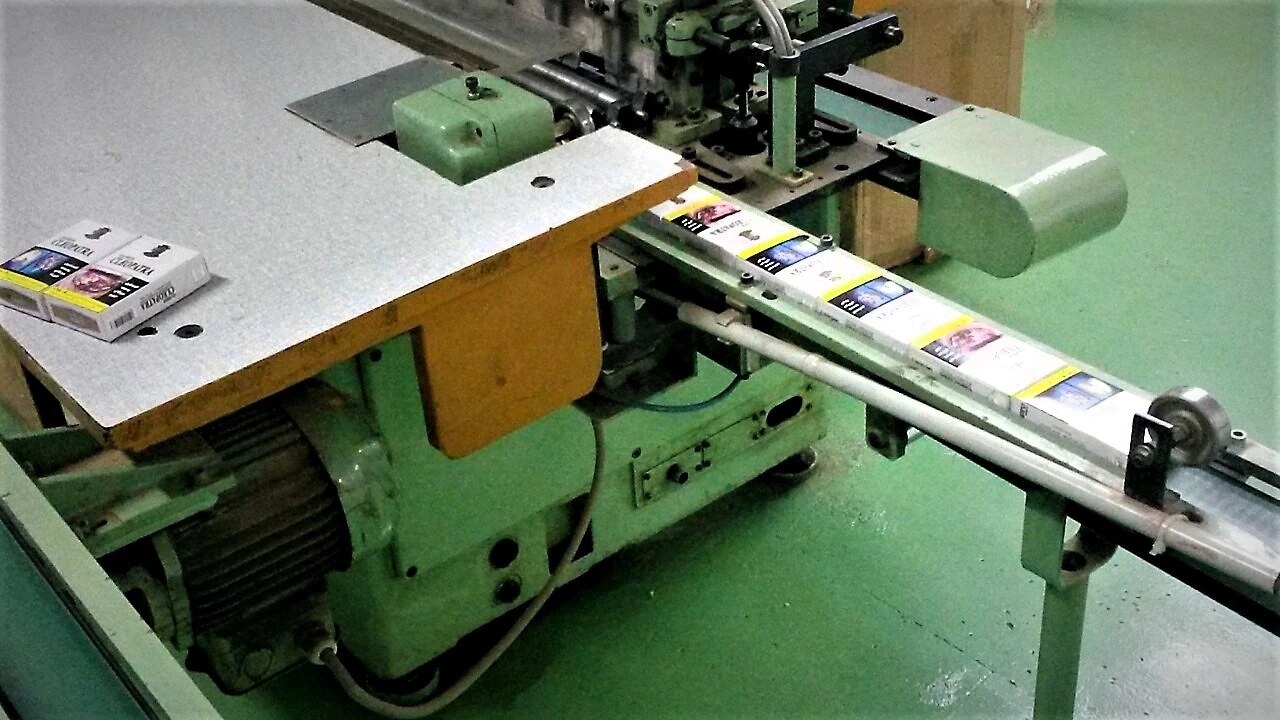
An in-depth joint investigation by journalists from BIRN and ARIJ revealed that millions of packs of Egyptian-branded “Cleopatra” cigarettes were being produced in Albania at the Albania Tabak factory in Librazhd. The factory, which had been producing around 22 million packs a year since 2014, had received a license from an international company to produce and distribute these cigarettes in Europe and beyond.
According to the documents obtained, the cigarettes were produced in Albania and sent en masse to Libya, while a significant portion is suspected of being illegally smuggled into Egypt, causing huge losses for the original Egyptian company Eastern Company, which owns the “Cleopatra” brand.
UK Customs investigations had flagged this activity in 2015, leading to the launch of investigations in Albania as well. For this reason, in late 2015, production at the Albania Tabak factory was temporarily suspended, while the case was reopened in 2017, when links were identified between various companies based in the British Virgin Islands and Cyprus, which were suspected of managing international cigarette trafficking.
Investigations revealed that beyond foreign companies, well-known political and family figures in Albania are also involved in the scheme, raising suspicions of organized crime involvement in this activity.
The factory manager, Servet Dauti, in his response to the investigations, has denied any legal violations and stressed that production is carried out in accordance with Albanian laws and the international contracts they have.
He stated that everything that happens outside Albania’s borders is not their responsibility. However, traces of production from Librazhd regularly end up in the illegal markets of Egypt and Libya.
Albania Tabak produced cigarettes for the Eques Holding Group company, which had obtained the license to use the “Cleopatra” brand in Europe and for international markets.
Court documents in Albania, leaked British customs reports, contracts and interviews with factory managers at the time revealed that around 22 million packs of cigarettes were produced annually by Albania Tabak in Librazhd, before being sent for export to Libya.
According to the Egyptian company itself, the cigarettes are smuggled across the green border and sold for around $1 per pack, damaging state revenues and fueling a robust black market. The factory in Librazhd operated in partnership with a company registered in a tax haven, Eques Holding Group, and owned by an Iraqi businessman named Faris Al-Rifai. This company, linked to other offshore entities, claims to have the legal right to use the Cleopatra brand in Europe and Albania.
The Albanian prosecution opened an investigation for violation of industrial property rights, money laundering and illegal production, but the case was suspended pending information from foreign jurisdictions. Meanwhile, according to the documents obtained, production resumed in 2017 after a new contract with Eques, which foresees the production of 175 million packages per year.
The company’s history shows that it has been owned by the Jashari family since 2010. Ilir Jashari, former owner and person with a record of convictions for drug trafficking in Italy, remained a secret part of the factory’s history.
Another part of this complex network also appears in Vietnam, where in 2012 Cleopatra cigarettes began to be produced through the same scheme using trademarks registered in the EU by WorldWide Spirits.
Meanwhile, independent fiscal experts who consulted with journalists stressed that the document showed “a complete lack of transparency in the company’s finances and production,” as well as “a vast international tax avoidance network.”

Lindita Çela është një gazetare investigative e shquar, e njohur për raportimet e saj të përpikta dhe të guximshme mbi krimin e organizuar dhe korrupsionin në Shqipëri. Me një karrierë që shtrihet për mbi dy dekada, Çela është konsoliduar si një figurë e rëndësishme në fushën e gazetarisë investigative, duke fituar vlerësime si në nivel kombëtar ashtu edhe ndërkombëtar për punën e saj.