






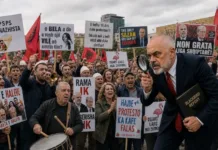

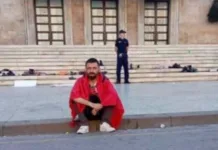


As the country approaches local elections next year, political parties have begun discussions on changes to the Electoral Code, bringing back into focus electoral reform, a process that has accompanied almost every election in Albania. Since the Code was adopted in 2008, around 12 changes have been made, while only the 2013 elections were held with the same rules as the previous elections.
While the joint DP-SP initiatives generate debates on transparency, the influence of private interests, and the real control of money in politics, electoral reform seems to “always manage to bring together” the two largest opposing parties in the country.
Experts explain that changing electoral elements such as the electoral threshold, the formula for distributing mandates, the electoral system, or coalitions, have over the years become a process where major parties develop a cold, pragmatic analysis on how they can maintain the balance of power and electoral advantage.
The demand for electoral reform does not come only as a political initiative of the parties in the country but as one of the obligations related to the European integration process and the democratic standards required within the framework of Group Chapter 1 “Fundamentals”. An extension of the chapter that constitutes the essence of the integration requirements: the functioning of democratic institutions, the rule of law and the fight against corruption.
But researchers argue that to achieve their goals, political exponents have not spared even aspirations for integration, using it as an alibi to enable occasional changes in reform, which allows them to “play by their own rules.”
First of all, arm yourself!

It has been 18 years since the political summer of 2008, when constitutional changes and a new electoral reform shook up the Albanian political scene. At that time, Ilir Meta, then at the head of the Socialist Movement for Integration, along with other small parties, protested for days against the changes being approved by the Democratic Party and the Socialist Party.
While small parties went on hunger strike warning about the consequences of the reform, the two historical political opponents, the DP and the SP, found common ground to change the electoral system.
With the adoption of the new Electoral Code, Albania switched from a mixed system to a regional proportional system, a change that, according to critics at the time, would strengthen the dominance of the two major parties and make it more difficult for new political forces to be represented. The warnings from that time continue to resurface today in the debate on electoral reform, where once again the DP and the SP seem to agree on the most important issues of the system.
At the center of recent discussions has been the electoral threshold, the mechanism that determines the minimum percentage of votes a party must receive to secure seats in parliament. The proposal to increase the threshold from 2 to 4 percent is seen by experts as an intervention with a direct impact on political balances and parliamentary representation.
Political Science professor Blendi Çeka argues that such a threshold would make it almost impossible for new entities to enter the race.
“The 4% threshold is a criterion that in itself almost eliminates any tendency to have new entities in the race, in a reality like ours today, where 95% of the parliament in terms of MPs is owned by the PD-SP,” said the researcher.
The most at risk from a possible increase in the threshold remain precisely the new political parties, which see this move as another attempt to limit pluralism and consolidate the control of traditional parties over the electoral system.
Even the leader of the Opportunity Party, Agron Shehaj, whose party secured two mandates in the last parliamentary elections, warns that the proposed changes risk making the system even more closed and more controlled by the big parties.
“We have a clear position: the current system is bad, but our concern is that the SP and the DP are trying to make it even more closed and controlled. And this is not just an issue for the “Opportunity Party”, but for any new political force that may arise tomorrow,” said Shehaj.
One of the critical voices against this proposal is the leader of the Together Movement, Arlind Qori, who considers the changes as an attempt by the two major parties to limit political competition.
“The electoral system that the SP and DP seem to be proposing is an attempt to eliminate from the table new parties that do not want to form a coalition with the old parties. Any threshold higher than the natural one (number of voters/number of seats in parliament) is in principle unfair,” declared Qori.
While the 4% threshold has not yet been officially adopted, supporters of this idea argue that a higher threshold would reduce political fragmentation and produce more stable parliaments, by limiting the entry of very small parties that represent the narrow interests of certain individuals.
Supporters of the initiative “legitimize” the doubling of the threshold by taking the experience of some European countries, which have even higher thresholds.
However, critics of the changes argue that the 4% threshold is considered high, even at the international level.
“4% is a high threshold at the international level, it is not considered a low threshold, like in Europe or beyond,” argues researcher Blendi Çeka.
For the Czech Republic, while the current electoral system produces penalizing effects for small parties, the deliberate penalization goes beyond reform, affecting democratic standards.
“If they are not favorable, at least they should not be penalizing, and this is the standard of democracy,” said the researcher.
Another element generating debate is how the reform might address pre-election coalitions. For small parties, this is one of the most sensitive points of discussion, as the way coalitions are built can explicitly determine their political survival.
Experts on electoral systems point out that in proportional systems, pre-electoral coalitions often serve as a mechanism that allows small parties to pool votes and secure parliamentary representation. But critics argue that the formula currently being discussed creates different standards of competition between parties that run alone and those that join under the banner of grand coalitions.
For the leader of the Joint Movement, this constitutes a “cunning” initiative that through the recognition of pre-election coalitions, not with a threshold for parties but for the coalition, even a party that reaches nearly 4% of the vote can remain outside parliament, while a much smaller political force can secure mandates through a coalition with the major parties.
“Thus, if in the next elections the Together Movement receives 3.9999% of the votes, there will be no MPs. Whereas if another party enters a coalition with the SP or the DP and the coalition, as expected, crosses the threshold, the threshold for the small party to enter parliament will be 0.7%,” says Qori.
The debate over the electoral threshold is not the only problem, nor is it the most fundamental one, in the reform being negotiated between political parties.
Focusing discussions solely on the threshold percentage risks overshadowing even more fundamental issues related to how the electoral race actually functions, starting with equality in competition, electoral administration, and the architecture of the electoral system itself.
Political scientist Afrim Krasniqi argues that reform should not be limited to mathematical formulas for the distribution of mandates, but should also address issues that have been the subject of political debates and international recommendations for years.
“Basically, the threshold is not a problem, the problem is equality and guarantees in competition, in access and in electoral administration, as well as whether the electoral system will continue with 12 zones, with 1 zone, or another formula. What is important in this case is why the SP and the DP do not make public and official their opinion on the system, on electoral administration, on the diaspora vote, on the electronic vote, on open lists and on vetting in politics,” Krasniqi declares.
“Financing of Political Parties”

The financing of political parties has become one of the most controversial points of electoral reform, in a country where for years international reports have raised doubts about the transparency of electoral campaigns, the use of state resources and the influence of private interests in politics. It is in this climate that the Socialist Party of Albania and the Democratic Party proposed the new draft “On the Financing of Political Parties”, a bill that aims to create stronger control mechanisms over the way politics is financed in Albania.
On paper, the draft brings some of the strongest interventions made in this field over the years, such as the ban on party financing from companies with concession contracts, public-private partnerships and public contracts with the state, even up to three years after the end of the contractual relationship. The list of prohibited entities also includes strategic investors, gambling companies and entities operating in the field of cryptocurrencies, sectors that have generated debates about the links between business and politics for years.
However, beyond the severity of the measures envisaged in the draft, the main debate remains whether the law will actually be enforceable in practice.
The leader of the Mundësia Party, Agron Shehaj, stated that the draft itself contains only a few minor proposals which do not solve the problem of party financing.
“Our fundamental concern has been and remains full transparency on the financing of political parties, so that 100 million euros are not spent and only 3 million are declared. This must go hand in hand with equal access to the media, as well as with a fairer access to public funds, which are currently insufficient,” he stated.
In an immediate reaction, the OSCE/ODIHR also raised concerns in an urgent preliminary opinion on the Albanian draft, which identified serious loopholes that could allow for the avoidance of control through indirect financing or the use of third parties.
While ODIHR calls for a ban on donations made in the name of another person and the identification of the real owners of donor companies, arguing that shell companies can be used to circumvent legal restrictions, researcher Krasniqi says that these issues have been openly listed by civil society, but have not been taken into account by the Parliament.
“Why did they have to wait for ODIHR and why did the Assembly initiate a request for interpretation from the Venice Commission when in fact all the elements were stated in the Assembly meeting with civil society, and most of them in the ODIHR’s periodic reports, so they had them, knew them, had them deposited in writing and could have addressed them immediately in the first draft,” he said.
Integration as an “alibi”

“Joint drafts”, “joint positions” or “joint resolutions” are phrases that come to the fore mainly only in the context of electoral reform, in a political climate dominated by conflictual clashes.
The European integration process has increasingly been introduced into the rhetoric accompanying the reform, shifting electoral reform from the realm of internal political debate to that of the European negotiation process.
But for researchers, the constant reference to integration constitutes in itself a use of the latter as a political argument to justify occasional interventions in the electoral system.
“Generally, the European Union instances have to do with the process, with the transparency of the process, how the campaign is conducted, but not with elements of the electoral system. This has mainly been used as an argument to justify changes in electoral systems with the excuse that there is international pressure. This is used as an alibi by the main parties to affect the rules of the game every election,” emphasizes Blendi Çeka.
The European Union seeks to guarantee democratic standards, the functioning of institutions and the rule of law, elements that constitute the essence of chapters 23 and 24 of the European integration process.
Even for electoral expert Afrim Krasniqi, the real problem is not simply related to electoral formulas or technical changes to the Code, but to the democratic standard of the elections themselves and the legitimacy that the political system produces.
“The only condition is free, fair and equal elections. From elections come the parliament, the government, democratic legitimacy and decision-making power, so if the source is not accurate, legitimate and acceptable, all its products become defective, contested and transformed into a source of periodic crises, boycotts and protests, as well as abuse of mandates and governance,” says Krasniqi.
However, while electoral reform is publicly presented as part of democratic standards and the European integration process, political parties continue to negotiate and redesign the mechanisms of the electoral system themselves, using their political weight and the control they have over the process.
From the electoral threshold, to the formula for distributing mandates, the electoral system, coalitions, or election administration, reform has turned over the years into a process where major parties develop a cold, pragmatic analysis on how they can maintain the balance of power and electoral advantage.
It is for this reason that, even in moments of heightened political tension, electoral reform remains one of the few issues where historical opponents manage to find compromise. Not necessarily for the sake of democratic standards, experts say, but for the sake of what is known in politics as “taking the lion’s share,” control over the rules that define the political game itself.
“They set the rules, they benefit from them. I’m not saying that the system is untouchable, but on the other hand, the change in each election is a pretty weak indicator in terms of democratic standards,” says researcher Çeka.

Xhesika Tollia është gazetare në “Rrjetin e Raportimit të Krimit të Organizuar dhe Korrupsionit në Shqipëri” (RRKOKSH), ku fokusohet në investigimin dhe raportimin e çështjeve të ndjeshme që lidhen me korrupsionin dhe krimin e organizuar. Ajo ka përfunduar studimet Master në Shkenca Politike në Universitetin e Tiranës, duke i dhënë një bazë të fortë akademike njohurive të saj mbi institucionet, politikën dhe proceset ligjore në Shqipëri.
Gjatë karrierës së saj, Xhesika ka zhvilluar eksperiencë të rëndësishme pranë RTSH-së, ku është përfshirë në përgatitjen dhe realizimin e projekteve mediatike, duke ndihmuar në prodhimin e përmbajtjeve të thelluara dhe informuese për publikun. Ajo është e njohur për qasjen e saj të kujdesshme dhe analitike ndaj lajmeve, duke kombinuar investigimin me raportimin objektiv dhe të detajuar.