


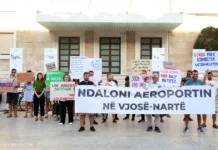
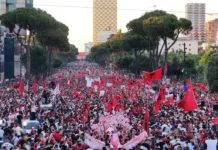
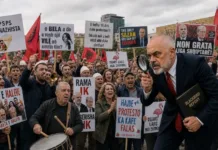
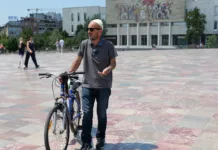
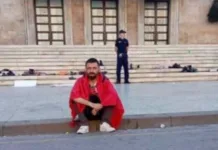

The protest in Zvërnec was a test for the media. Not for the government, not for the opposition, but for the media itself. And the result was disappointing.
Most television stations and portals did not find space to report the protest. However, they found time and space to fully broadcast the Prime Minister’s reaction and, earlier, that of the Police.
The protest was missing, but the comments about it were there. A bit like reporting the result of a match you never broadcast.
Editorial independence, integrity and professionalism are not measured when broadcasting press conferences or official statements, but when a major event occurs, when there is a conflict of interest and when the government prefers silence. Major events are the time when the media must show that it is an information institution and not a bulletin board.
The inertia of behaving like an ostrich is impossible in the age of social networks. News does not disappear because you decide not to broadcast it. News circulates, is shared, commented on, and often the silence of the media itself becomes bigger news than the event. Then comes the big surprise: why does the public no longer trust the media?
Meanwhile, most of the media continues to feed on the daily political rhetoric: “he said”, “she said”, “this attacked”, “he reacted”. Politics has become their oxygen. When the government boycotts them, they have a problem. When the opposition boycotts them too, the problem becomes existential. The evening debate immediately descends into the second category, with politicians who know the moderators better than the voters.
Today the government is the media itself, the opposition is the media, the activist is the media; every citizen with a phone in their hand is potentially the media. In this vast cacophony, you cannot be professional by hiding the news. The only path to credibility is to do what no one else can do with professional standards: seek and tell the truth.
The Zvërnec case showed that most of the media failed even in the minimum of the profession: news. There is no question of in-depth reporting or serious investigation. And when the media does not report what is happening before the eyes of the public, trust is dead. And trust cannot be bought, nor can it be obtained by concession.
When the media refuses to bear witness to reality, it loses its reason for existence. The public, and especially the youth, no longer waits for the news to find out what happened in Zvërnec; they see it live on Instagram, TikTok or Facebook. By losing their audience, the media becomes totally dependent on government money, oligarchs or shady funds.
If it follows this path, the future of the media is written: it is doomed to irrelevance. By turning into PR offices for the government, televisions and portals will definitely lose their audience, which already finds reality without filters on social networks. The media will not die because it will close, but because no one will follow it anymore.

