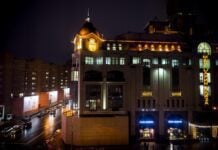
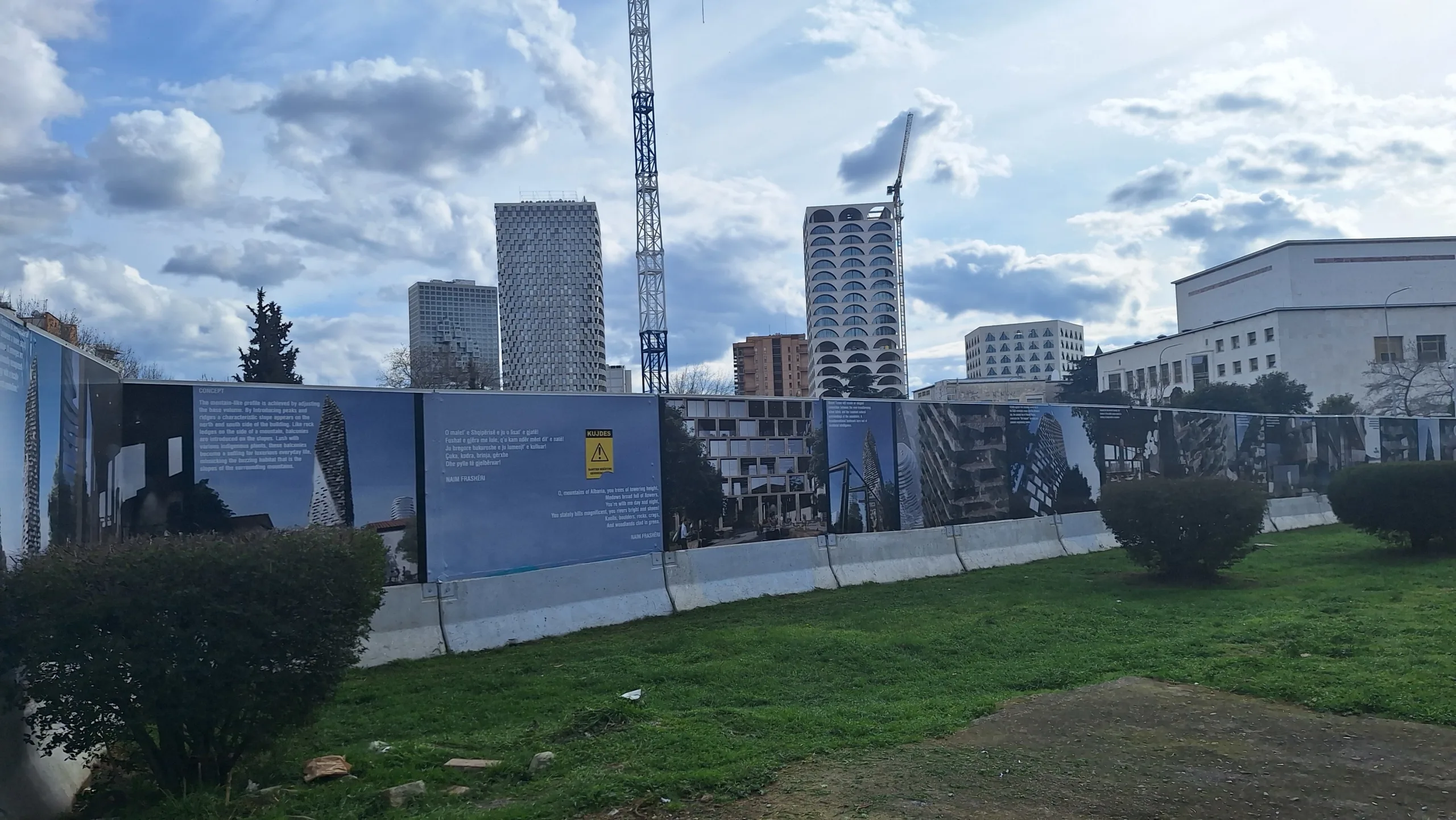
360° panoramic view: Skanderbeg Square, January 2026. Source: shteg.org
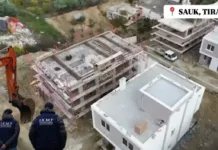
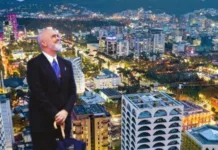
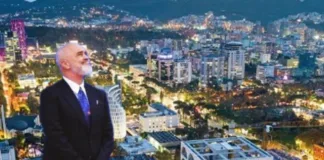
Tirana is experiencing one of the most intense phases of construction in its modern history. High-rise towers, residential complexes and iconic projects signed by international architects such as Stefano Boeri, Marco Casamonti, as well as studios such as MVRDV and 51N4E, have significantly transformed the capital’s urban skyline.
However, behind this image of development lies a profound social and economic paradox. According to the Albanian Institute of Statistics, in 2023 one in three apartments in Albania was uninhabited, while in Tirana and its surroundings alone there are over 85 thousand empty apartments. This is happening in a country that, between 2011 and 2023, has lost about 500 thousand inhabitants, mainly due to emigration.
Despite the decline in real housing demand, construction has escalated. The area of housing construction permits increased from 50 km² in 2015 to over 2,000 km² in 2022, turning the construction sector into one of the main pillars of the Albanian economy.
Contrary to market logic, housing prices have not fallen. On the contrary, according to the Bank of Albania, they increased by 32.6% on an annual basis, making housing increasingly unaffordable for citizens, while wages have not kept pace.
This development has been driven by urban policy launched in the early 2000s and consolidated with the Tirana 2030 plan, which promotes vertical construction and densification of the city. But criticism from architects and urban planners shows that this model has brought about the collapse of urban heritage, social exclusion, pressure on infrastructure and serious doubts about the sources of financing, including corruption and money laundering.
Tirana of the towers

A city once known for its narrow streets and small villas is changing at a rapid pace, with 40- and even 70-story buildings rising one after another. International architecture firms such as Stefano Boeri, known for the Vertical Forest in Milan, Marco Casamonti, and the MVRDV and 51N4E studios, have designed parts of this panorama. But behind this modern facade lies another reality: uninhabited apartments and dozens of reports raising doubts about the sources of financing.
According to the Albanian Institute of Statistics, in 2023, one in three apartments in Albania was empty.
This figure is much higher than in the 2011 census, when only 21.6% of apartments were unoccupied. Between 2011 and 2023, Albania lost almost 500,000 residents, mainly through emigration, creating a housing market with high supply but low demand.
Architect Artan Kacani says that construction in Tirana has reached extraordinary proportions and that this sector is almost informal.
“From the satellite measurements of construction that I have made from 2005 to 2025, we are dealing with approximately 20 million square meters of construction. This sector has been completely informal from 2005-2015. 80% of the square meters in the last two years in Tirana, 2 million square meters, have been built with cash, that is, with money that is not traceable through banks or other known actors in terms of bank accounts.”
Kacani explains that this has turned the construction sector from a housing provider into a “for-profit industrial system”:
“The architect and engineer is a professional contracted for the design of the construction and he is one of the parties. In Albania there is a huge legal misunderstanding: the roles of the developer, the builder and the designer are not clear. The title of developer should have been for all builders, not just for a few privileged by Rama who receive the status of strategic investor.”
According to him, the mechanisms of pre-emptive purchases and privileges for some investors have created a system that is not based on the real demand of citizens.
“Construction firms are not the ones who should receive project financing. This is because in Albania they wanted the builder to avoid taxes as a developer and priority is given to builders to build as a market demand, not as a product production proponent.”
Despite the increase in supply and housing vacancy, prices continue to rise.
In the first half of 2025, housing prices in Tirana increased by 5.1%, while the annual comparison shows a 32.6% increase. In 2011, an apartment in central areas cost 700–2,500 euros/m², while today prices have reached 2,500–4,500 euros/m².
Urban planner Entela Koja describes this situation as an unnatural market.
“This issue is not necessarily directly related to financing, because in a good urban location and position, construction immediately appears as a profitable investment. What makes the situation truly suspicious is the fact that issuing construction permits has become a monopoly of connections with the party-state, and as a result, only through these connections can construction be carried out. In this context, corruption is the real determining factor of development, not market logic or urban need.”
She adds that the pressure to lower standards and the lack of technical controls exposes architects and engineers to professional risk:
“Pressure to lower standards and the role of the KKT. Of course there is pressure to lower standards, but this is directly related to the integrity of the person. The problem becomes more serious in the conditions when parallel responsibility entities are created, such as local units on the one hand and the KKT – National Council of Territories (led by the Prime Minister) on the other, which tends to take over the most important competencies of local projects.”
Construction market

The construction boom is directly related to urban policies initiated during Edi Rama’s term as mayor and continued by his successor Erion Veliaj.
In 2017, the Tirana 2030 plan, drafted by Stefano Boeri’s studio, was approved, which promotes vertical development to free up public spaces and reduce traffic.
According to Kacan, the construction sector accounts for about 16% of GDP in Albania, while in most European countries it does not exceed 6–8%:
“We have turned construction into an industry, not a service sector. Our economy has become dependent on this sector.”
He emphasizes that the legal ambiguity between the roles of developer, builder and designer, as well as the status of strategic investors, has created privileges for a limited group of construction companies.
The phenomenon of introducing foreign studies without competition has often brought a “fresh eye” to the design spirit, but due to the lack of knowledge of local standards and characteristics, in many cases they misinterpret the context.
“The introduction of foreign studies without competition, with direct selection by the establishment, cannot be denied that they have often brought a “fresh eye” to the design spirit, but due to the lack of recognition of local standards and characteristics, in many cases they have become incorrect interpreters of the context. In addition, they often serve as an alibi for the government, which in the name of “development” covers up clientelism and corruption,” says urban planner Koja.
According to experts, this phenomenon is not simply aesthetic; it is closely related to the lack of protective legal instruments, which leaves room for financial abuse and pressure on professionals.
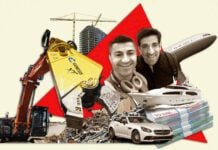
A report by the Friedrich Ebert Foundation, published in 2024, estimates that corruption and tax evasion generated over 8.1 billion euros during 2015–2024, mainly channeled into the construction sector.
According to the data analyzed in the study, during the period 2015-2024, construction permits were issued in Albania for 11.48 million square meters with an average market value of 16.238 billion euros. Of this amount, only 7.108 billion euros were identified as being financed from legal sources, specifically 5.521 billion euros from bank loans and 1.587 billion euros from foreign direct investments.
The difference of at least 9.13 billion euros raises serious questions about the origin of the funds. While some of this difference may represent unsold land or financed by legitimate savings, the report argues that the most worrying indicator is related to illicit sources.
“Money laundering in the construction sector functions as a win-win system, where all actors involved, from buyers with dubious funds who legalize capital, to builders who secure quick financing, to real estate agents who receive commissions and the government who increases tax revenues, benefit from this phenomenon,” the report states.
Entela Koja emphasizes that issuing construction permits has become a political monopoly, while the concentration of powers in the National Territorial Council has weakened local control and professional standards.
Without protective legal instruments and without housing policies based on real needs, Tirana is being built as a financial space, not as a city to live in.

Vjolanda Peca është diplomuar në Gazetari dhe Komunikim në Universitetin e Tiranës. Ka përvojë në gazetari investiguese dhe prodhim multimedial, duke punuar në Emisionin “Vetting” në News24 dhe në Faktoje.al, ku ka zhvilluar aftësi në hulumtim, verifikim faktesh, intervista në terren dhe prodhim përmbajtjesh për publikim online. Fokusi i saj është krijimi i përmbajtjeve informative që angazhojnë audiencën dhe ofrojnë informacion të thelluar.

Xhesika Tollia është gazetare në “Rrjetin e Raportimit të Krimit të Organizuar dhe Korrupsionit në Shqipëri” (RRKOKSH), ku fokusohet në investigimin dhe raportimin e çështjeve të ndjeshme që lidhen me korrupsionin dhe krimin e organizuar. Ajo ka përfunduar studimet Master në Shkenca Politike në Universitetin e Tiranës, duke i dhënë një bazë të fortë akademike njohurive të saj mbi institucionet, politikën dhe proceset ligjore në Shqipëri.
Gjatë karrierës së saj, Xhesika ka zhvilluar eksperiencë të rëndësishme pranë RTSH-së, ku është përfshirë në përgatitjen dhe realizimin e projekteve mediatike, duke ndihmuar në prodhimin e përmbajtjeve të thelluara dhe informuese për publikun. Ajo është e njohur për qasjen e saj të kujdesshme dhe analitike ndaj lajmeve, duke kombinuar investigimin me raportimin objektiv dhe të detajuar.