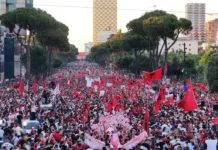
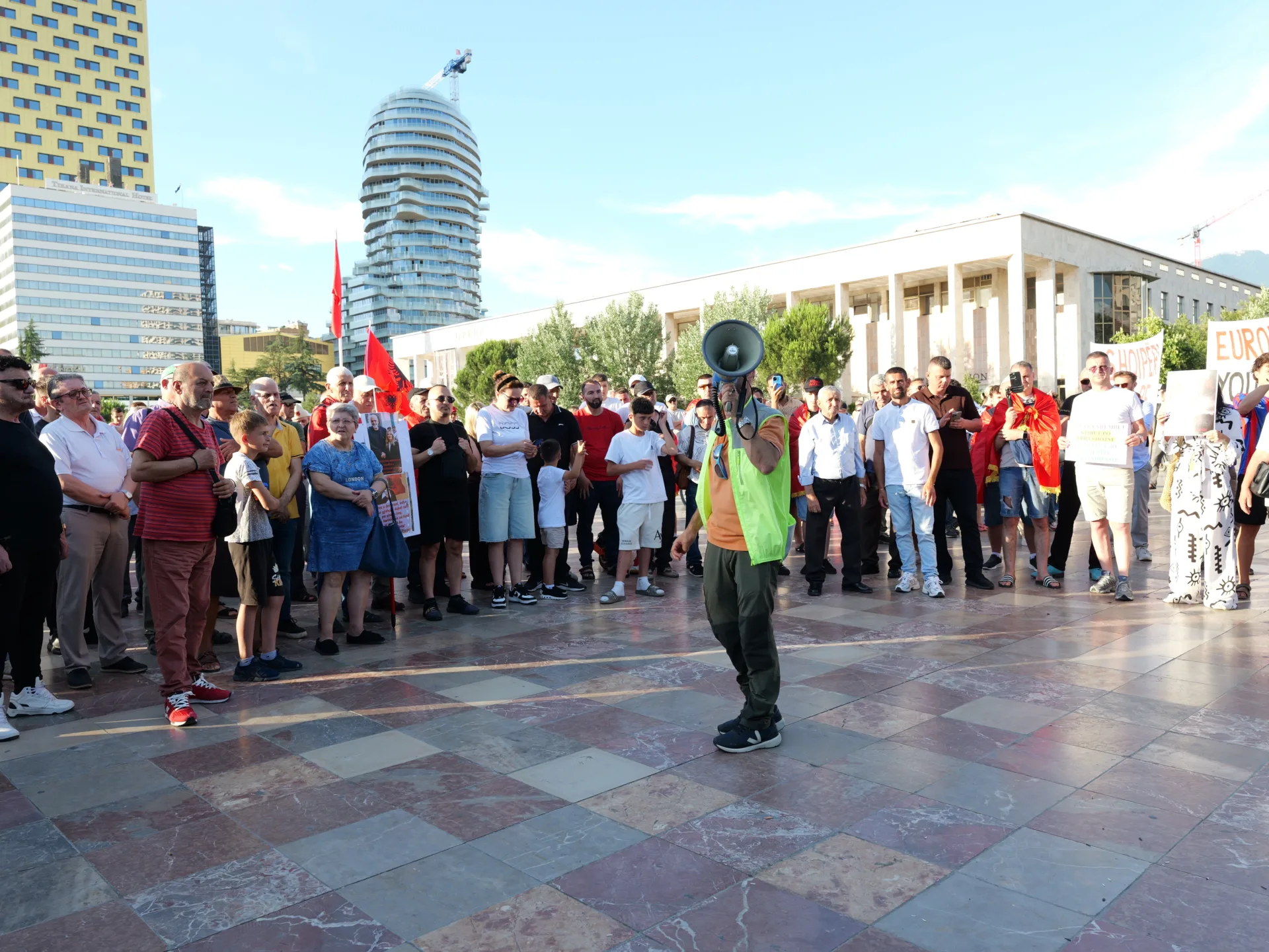
There is a natural curiosity about the protest that has been going on in Tirana and other cities for more than two weeks. How is it possible that such a heterogeneous mass of people came together? How is it possible that people who, under other conditions, would be political, ideological, cultural, and even personal opponents are coming together in the same square? And why did Zvërnec bring about this moment? Why not other moments earlier?
I’m giving my humble opinion on this. For the first time, citizens saw clearly, without fog. I’m explaining.
First, people are more alike than different. We all need air, water, food, security, property, dignity, opportunities for children, peace for the elderly, and a place where we don’t feel superfluous. When these basic needs are not at risk, we find time to deal with our differences. We fight over political beliefs, tastes, personal histories, parties, leaders, television screens, sports, and the protagonists of the day.
But when the foundation is threatened, differences become small. For example, in a family people quarrel with each other. But if the family is threatened from outside, quarrels are suspended. When a city is threatened by a common injustice, people put aside internal resentment. When the country is threatened by some foreign aggression, local divisions fade. And if tomorrow all of humanity were threatened, even wars within the species would seem small.
So, the common enemy is a unifying factor.
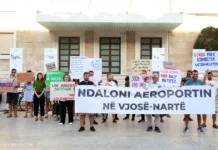
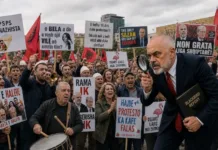
In the protest there are leftists, rightists, disappointed people, yesterday’s indifferent people, old activists, young people without parties, citizens who no longer trust any party flag, environmentalists, residents, professionals, parents, students, immigrants speaking from afar, and people who had never taken to the streets until yesterday.
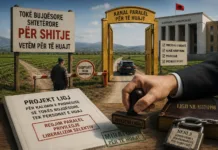
What unites them is not a common political program, but the recognition of a common danger. This danger is not just a resort or a fence. It is not a lagoon or a beach. Zvërnec became a symbol because it concentrated the entire pattern that unites the arrogance of power, the lack of transparency in decision-making, the seizure of public assets, the introduction of property into the hands of crime, the silence of politics, the silence of the media, the ease with which nature is treated as a private commodity.
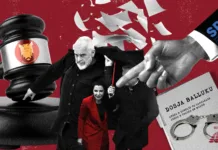
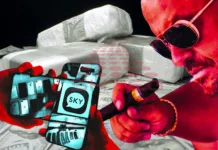
This model has a clear scheme. Politics produces laws, permits, privileges, strategic status, institutional tolerance and administrative protection. Speculative capital turns these privileges into private assets: land, construction, resort, concession, tower, port, airport, road, beach. The media, dependent on money, building permits, strategic status, tenders and the relationship with power, produces false debate. Organized crime brings dirty and fast money, pressure, fear, intermediaries and influence. Then the money returns again to politics, to the media, to influence and immunity.
This creates a closed machine. Crime supports politics. Politics opens the doors to speculative capital. Capital finances media influence. The media keeps the public confused. The public is divided into artificial camps. And in the end, everyone, without realizing it, loses nature, public property, trust, an honest economy, the future of children and the right to live in a country that is not sold for a pittance.
But one might rightly ask: did this common enemy emerge today? This pattern was here before. Why didn’t we see it sooner? Why didn’t we realize earlier that we have more things in common at stake than reasons to be divided?
Because there are at least two mechanisms that work every day to produce disruption.
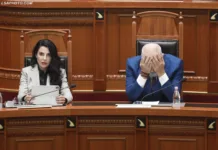
The first mechanism is the game of old politics, especially the Rama-Berisha binomial. When these two clash, real or theatrical, the public takes sides. Fandom begins. One is defended, the other is hated. And so, the public forgets that they are not seeing two different worlds, but two poles of the same system that have fed each other for decades.
The second mechanism is the media. Every day, especially in prime time, the media produces a topic, a fight, a studio, a conflict, a spectacle. The citizen sits down to get information and comes out with a new enemy at the table. He argues with his family, with his neighbor, with his friend, with his colleague. He argues about politics, about reality shows, about sports, about characters, about accusations, about statuses, about rumors, about anything that is thrown at him as bait.
And so, the common enemy hides behind the daily noise and is not seen. Instead of seeing the system that robs us, we see each other as the problem.
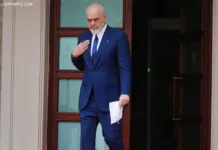
And it was here that Zvërnec created the big crack in the facade. Because this affair involved very sensitive international names and interests. Politics could not play the usual game. Rama had an interest in protecting the project as access to the Trump family circle. Berisha, for similar political reasons, could not oppose it. Thus, the classic binomial of division fell silent.
Even the media was silent. The big television stations, tied to construction interests, permits, strategic investor status, tenders, concessions, favors and fear of the government, did not talk about Zvërnec.
And something truly rare happened. For a few days, the two major noise factories fell silent.
In that silence, the citizens saw each other. Without the mediation of the screen, without the party command, without that studio telling you who you should fight tonight. Without the leader assigning you the enemy of the day. People looked each other in the eye and realized that they had been on the same side of the fence the whole time.
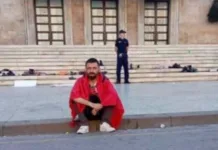
Here came the wave of shocking images spreading from Zvërnec. Not those abstract images with corruption accusations. Not government decisions that only lawyers read. But simple, brutal images that are understandable to anyone. People being dragged by private guards to a beach that is surrounded by barbed wire, that is treated as if it belongs to a private superpower, where even the police are treated like a basin.
That was enough. Because that was the moment when people no longer saw just Zvërnec. They saw all of Albania and their lives. They saw their neighborhood, their taxes, their parents’ pensions, the emigration of their children, the public hospital, the public school, the dead court, the messed-up cadastre, the thieving municipality, the police we don’t like, the media that pretends to love us, politics and business that are closely connected.
And the beauty is that once you see something, you can’t unsee it. You can’t easily go back to the previous state. You can no longer be convinced that the problem is “the other side”. You can no longer be convinced that the media that is silent about the plundering of public property is really the media. You can’t even convince the opposition to see it as an alternative. You can’t even convince the government to see it as not making fun of the citizens, but working for them selflessly.
This is the moment of clarity. And this explains why the protest does not die down.
Now the machinery of noise and disruption is trying to restart. The media has returned to its noise. Politics seeks to get its hands on the protest. Individuals within and around it are trying to produce small conflicts. There are personal denunciations, suspicions, accusations, attempts at disruption, appropriation, diversion, radicalization or discredit. This was expected. But it is not a problem at all.
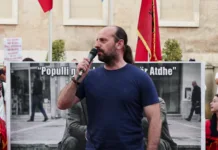
The real problem with the system is that the message has already come out. And there is no control that puts it back on the hook. Even like a microphone in the square, for example, it is heard for a few lines. Then it is lost. But the protest is no longer what is said into microphones and studios. The protest is what happens in the crowd. It is the cheering that arises by itself. It is the banner that is written by a child. It is the citizen who comes without a party and expresses all his talent in humor, irony, zeal. It is the immigrant who comes to a European city with a flamingo in his hand. It is the family that takes the child to the square.
The only important message is the people themselves on the streets. They are coming out against the model. Therefore, the calls against the old position and opposition are not a paradox. They are logical.
Zvërnec did not unite people because everyone became environmentalists overnight, with Iranian algorithms and Greek money. It united them because it was seen more clearly than ever that the state, the media, politics and crime are not separate issues. They are part of the same machine. And the moment the machine was exposed, people saw that they had not been opponents of each other. They had been victims of the same noise.
This is why Zvërnec brought momentum. Because in a few days the noise died down, the fog cleared, and the true face of the model was seen.
Now there is no turning back. There may be fatigue, petty divisions, attempts to capture, provocations, slander, labeling, false invitations to dialogue, and television spectacles to turn the people back into fans. But something has changed. A large part of the citizens have seen the scheme naked.
And a society that has clearly seen the common enemy is no longer so easily persuaded to fight for imaginary enemies. This is the success and political meaning of the protest. The people came out of the fog and saw what was happening to them. This is enough to start a new era of awareness.